Update Claude Code to version 2.1.273, open your running session in the Claude app, and you can now fork a Claude Code remote control session — the fork spins up as a background session on your own computer while the original session carries on untouched. The feature landed in the official Claude Code changelog entry for version 2.1.273, released 15 September 2026, and it applies to any session started with the claude --remote-control command or the /remote-control slash command. For anyone running AI automation from a phone while their machine does the heavy lifting, this is the missing piece: one long-running session on your computer can now branch into parallel background workers without you ever touching the keyboard.
📺 Watch: Free Claude Code is Absolutely INSANE!
🔥 Get the Agent OS as a free bonus: AI Profit Boardroom members get the full Agent OS zip, prompt libraries, daily tutorials and weekly live coaching calls. → Get inside · Want AI SEO help 1-on-1? Book a free SEO strategy session →
What Session Forking Actually Is
Remote control in Claude Code links a session running on your computer to the Claude app, so you can steer work from your phone or another device while the actual execution — file edits, terminal commands, builds — happens on your own machine. Until this release, that link was one conversation deep: one remote control session, one thread of work. The 15 September 2026 changelog entry changes that. Per the official notes, Anthropic "added forking a session started with claude --remote-control or /remote-control from the Claude app; the fork runs as a background session on your computer".
In plain terms, a fork is a copy of your session's current state that splits off and continues independently. The original session keeps its context and keeps responding to you. The fork inherits that same context up to the moment of the split, then runs as a background session on the computer that hosts the remote control link. You end up with two workers that both know everything the session knew, each free to head in a different direction.
How to Fork a Claude Code Remote Control Session
The workflow documented in the changelog is short, and every step of it happens away from your desk. To fork a Claude Code remote control session you need three things in place:
- A current install. The feature ships in Claude Code version 2.1.273, dated 15 September 2026 in the official changelog, so update before you try it.
- A remote control session. Start Claude Code on your computer with the claude --remote-control command, or type /remote-control inside an existing session. That connects the session to your Claude account so the Claude app can see it.
- The Claude app. The fork action is triggered from the app side — the changelog is explicit that forking happens "from the Claude app" — and the resulting fork runs as a background session on your computer, not in the cloud.
That last detail matters more than it looks. Because the fork executes on your own machine, it has the same local access as the parent session — your files, your repositories, your installed tools. You are not getting a stripped-down cloud copy; you are getting a second pair of hands on the same workstation.
If you want AI agents doing real work on your machine while you get on with your day — workflows, prompt libraries and the exact setups behind them — check out the AI Profit Boardroom and get the full automation stack here. Want a 1-on-1 plan for using AI to grow your traffic instead? You can book a free SEO strategy session and map it out with Julian directly.
Why Forking Matters for AI Automation
The practical win is parallelism without babysitting. A typical automation day involves one session that has accumulated valuable context: it knows the project, the conventions, the goal. The moment you need a second task done — a research pass, a refactor, a content batch — you previously had two bad options: interrupt the current thread, or start a fresh session that knows nothing. Forking removes the trade-off. The fork carries the parent's context into a background session, so the new worker starts warm.
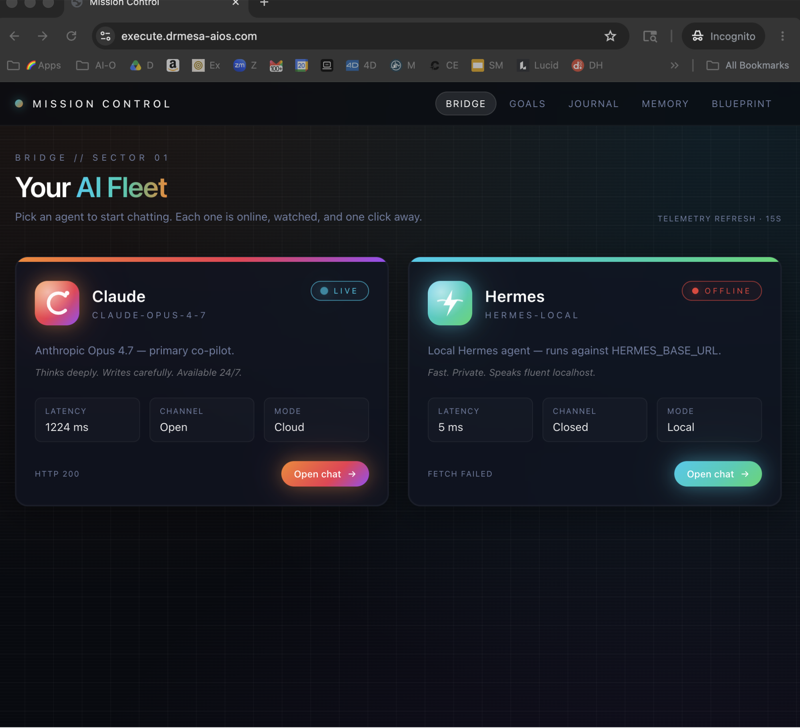
From a phone, that turns Claude Code into something closer to a dispatch desk. You review what the main session is doing, fork it, point the fork at the next job, and both continue on your computer in the background. It is the same direction of travel as the wider agentic pattern covered in the agentic OS approach to Claude Code: one brain, many hands, with your machine as the factory floor. If you are new to that way of working, the Claude Code learning guide covers the foundations, and the Claude and Hermes agent pairing shows what a multi-agent setup looks like once you scale past one worker.
📺 Watch: The NEW Claude + Agent OS is Crazy Good! 🤯
What Else Shipped in Claude Code 2.1.273
Forking is the headline, but the 15 September 2026 release notes list two other additions worth knowing about, plus a long tail of fixes. All of the following comes from the official changelog for 2.1.273:
| Change | What it does |
|---|---|
| Remote control session forking | Fork a session started with claude --remote-control or /remote-control from the Claude app; the fork runs as a background session on your computer |
| MCP disconnect notification | A notification now appears when an MCP server disconnects mid-session and automatic reconnection gives up, pointing you at the /mcp command |
| Gateway hint headers | New request headers for LLM gateways, opt-in via an environment variable, aimed at teams routing Claude Code through their own infrastructure |
The MCP disconnect notification is the quiet quality-of-life win for automation builders. When a tool server drops mid-run, you now get told instead of discovering it three failed steps later — and the notice points straight at /mcp so you can reconnect. The fixes list in the same release also covers permission-checker gaps, login error messages that now name the credential to refresh, and smoother behaviour in long-running sessions.
Fork vs Fast Mode: Two Different Remote Upgrades
It is easy to blur this release into the one before it, because both target remote workflows. Version 2.1.271, dated 14 September 2026 in the changelog, brought fast mode to Claude Code remote sessions — quicker output in cloud and self-hosted runner sessions where your organisation allows it. That release is covered in detail in the Claude Code fast mode for remote sessions guide. Forking, one day later in 2.1.273, is a different axis entirely: fast mode makes one session quicker, forking gives you more sessions. They stack. A remote control setup on 2.1.273 can run the main thread, fork background workers from your phone, and use fast mode where it is enabled — which is about as close to a self-serve agent fleet as Claude Code has offered to date.
How to Get the Update
Update your Claude Code install to 2.1.273 or later, restart your session, and start it with claude --remote-control (or type /remote-control in a running session) so it appears in your Claude app. If you have never used Claude Code before, it is worth knowing the on-ramp costs nothing: the free Claude Code guide walks through getting started without a paid plan, and the local Claude Code setup covers running it entirely on your own machine. Once you are in, the fork option applies to any remote control session on the new version.
Where This Fits in a Bigger Automation Stack
A forked background session is only as useful as the system around it. The pattern that makes this compound is the Agent OS — a structured operating layer of goals, memory and skills that any session or fork inherits, so every new worker starts with your business context instead of a blank slate. And if you are deciding which model brain should sit underneath those forks, the Goldie Bench write-up covers how the main agent models compare in hands-on tests, which is a better basis for that choice than launch-day marketing. Practical starting points: fork a research pass while the main session builds, fork a QA sweep before you ship, or fork a long content job — the kind of work the Claude Code SEO agent setup runs — so it grinds away in the background while your main thread stays responsive.
Does the fork run in the cloud or on my computer?
On your computer. The changelog wording is specific: the fork "runs as a background session on your computer". The Claude app is the remote control, not the runtime — execution stays local to the machine hosting the session.
Which sessions can be forked?
Per the 2.1.273 changelog entry of 15 September 2026, forking applies to sessions started with claude --remote-control or with the /remote-control command. Update to 2.1.273 or later first, since earlier versions do not list the capability.
Does forking cost extra?
The changelog does not describe any separate charge for forking itself — a fork is another running session, so it consumes usage from your existing Claude plan the way any session does. Check your plan's usage limits if you intend to run several background forks at once.
If you want a working agent setup that runs your marketing in the background — with the templates, live coaching calls and the full Agent OS bonus included — check out the AI Profit Boardroom and join the community here. Prefer to talk it through first? Book a free SEO strategy session and get a personal roadmap for ranking with AI.