The straight answer on Claude offline is no — Anthropic's Claude models run in the cloud, so there is no fully offline Claude, and every request to an Anthropic model needs an internet connection. But that is not the end of the story, because there are now two genuinely good workarounds: you can put local models behind the official Claude Desktop interface using Ollama's new gateway, and you can run a completely offline AI agent on your own machine with Hermes and a local model. I use both, and in this guide I will show you exactly what each route gives you, what it costs, and where the honest limits are.
📺 Watch: Run Claude Code for Free : Heres How
🔥 Get the Agent OS as a free bonus: AI Profit Boardroom members get the full Agent OS zip, prompt libraries, daily tutorials and weekly live coaching calls. → Get inside
First, the part most people searching for Claude offline actually need to hear: the value of "offline" usually is not the missing wifi. It is privacy, zero per-token cost, and owning a setup nobody can reprice or retire. Both routes below deliver those, and one of them keeps the Claude interface you already know.
Claude Offline: What Is Actually Possible in 2026
Let me separate the three things people mean when they type this search, because they have three different answers.
- Claude's own models without internet — not possible. Anthropic's models are hosted, full stop.
- The Claude Desktop app fronting a local model — possible, and now official. Ollama shipped Claude Desktop support as a third-party gateway on 25 August 2026, which means the familiar Claude interface can run a model that lives on your own machine.
- A fully offline AI agent — possible today with Hermes plus Ollama, where the agent's entire brain runs locally and keeps working on a plane, a train, or dead hotel wifi.
So the search phrase is really a fork in the road: keep the Claude interface with a swapped brain, or go agent-first and take the whole thing local. Here is each route properly.
Route 1: Claude Desktop With Local Models via Ollama
According to Ollama's announcement, you can configure Claude Desktop to work with Ollama as a third-party gateway provider. While the gateway is connected you can use any model available within Ollama — local models running on your own hardware, or Ollama's cloud models for bigger jobs — and you can toggle back to Anthropic's models whenever you like. The described flow is deliberately short: download Ollama, open it, select Claude, and turn Claude on. The app handles the plumbing, local models are configurable in Ollama's settings, and the whole thing is reversible — switch the feature off and your previous Claude setup comes back.
One precision point, because it matters: this covers the Claude desktop app, not the Claude Code CLI. I broke the whole announcement down in my Claude Desktop with DeepSeek guide, including which models make sense behind the interface. When the model you have selected is a local one, the brain doing the thinking sits on your disk rather than in Anthropic's cloud — which is exactly the property the offline crowd is after.
One thing to keep straight as you set this up: Ollama’s cloud models are part of the gateway offer for bigger jobs, but they are hosted — which means they need a connection just like Anthropic’s models do. The offline property comes specifically from the local models you pull to your own disk. If working without internet is the goal, make sure the model you have selected in Ollama’s settings is a local one, not a cloud one, and test it with the wifi actually switched off before you rely on it anywhere that matters.
If you want a private AI stack that costs nothing to run — set up for you step by step instead of pieced together from forums — check out the AI Profit Boardroom → Get the local agent setup inside
📺 Watch: Qwen 3.8 27B is NOW on Ollama… This is CRAZY!
Route 2: A Fully Offline Agent With Hermes and Ollama
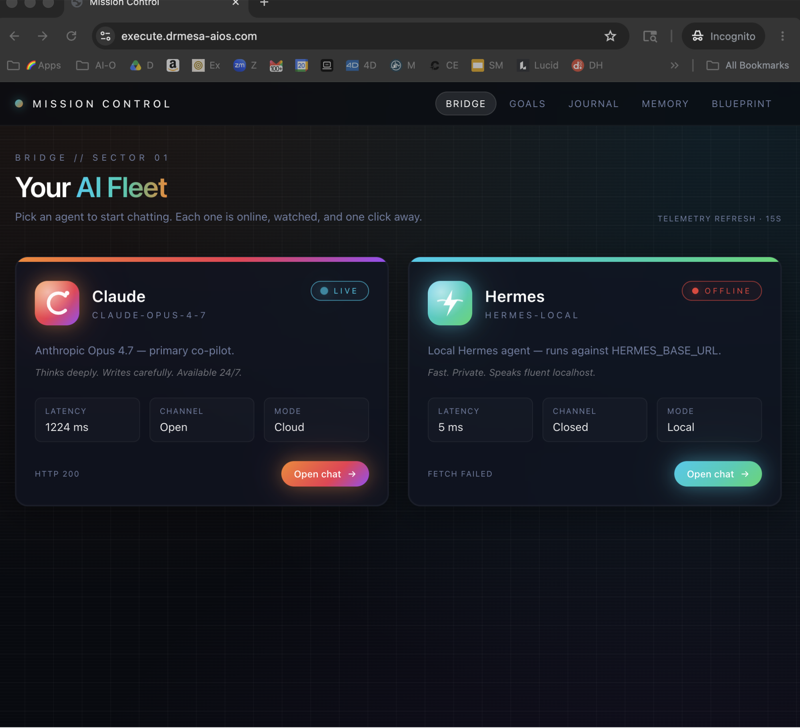
The deeper fix is not to bolt a local model onto a chat window but to run an agent whose entire brain is local. My setup: install Ollama, pull a model that fits your hardware, and point Hermes — the free, open-source agent I run my business on — at the local endpoint. The result is an agent that is completely private, works offline and costs nothing to run once the model file is on disk. My Hermes with Ollama local guide covers the why and the operating patterns, and the Ollama and Hermes setup covers the general pairing.
Four reasons this beats waiting for an offline Claude that is not coming. You own it — once the model file is pulled, nobody can rate-limit it, reprice it or retire it, which hosted models suffer all the time. It is fully private — prompts, files and outputs never leave your machine, which is the only honest answer to "where does the data go" when you handle client work. Zero marginal cost — after the download, every run costs electricity and nothing else, so you stop rationing the agent. And it works offline — planes, trains and dead wifi stop mattering entirely.
Claude Offline Routes Compared
Here is the honest side-by-side of the two workarounds, because they solve different problems and plenty of people end up running both.
| Question | Claude Desktop + Ollama gateway | Hermes + Ollama local agent |
|---|---|---|
| What you keep | The official Claude Desktop interface | A full agent: memory, skills, tools and files |
| Where the model runs | Your machine (local models) or Ollama's cloud models | Your machine, always |
| Switching back | One toggle returns your previous Claude setup | Point the agent at a hosted model whenever you choose |
| Best for | People who want the Claude interface with a local brain | People who want an agent that works anywhere, meter off |
My picking rule is simple. If your workflow is conversational — drafting, thinking, asking — the gateway route gets you a local brain inside an interface you already know, in minutes. If your workflow is agentic — missions, files, routines that run without you — go the Hermes route, because an offline chat window is still just a chat window, while an offline agent is a worker. And if you are unsure, start with the gateway today and graduate to the agent when you feel the ceiling.
What You Need to Run a Local Model
The checklist is shorter than people expect, and I keep it honest in my free local model install guide: a computer with at least 8GB of RAM (16GB is more comfortable for larger models), around 5–10GB of free disk space per model, Ollama itself, and Hermes if you want the full agent rather than a bare chat. No credit card, no account, no API key to manage, and the whole install usually takes under 20 minutes — most of which is the model downloading in the background. Which model to pull first depends on your hardware, and my best Ollama model ranking is the shortcut there.
📺 Watch: NEW LFM2.5 2.6B Changes Local AI FOREVER
What You Give Up When You Go Offline
I will be straight with you, because this is where most offline-AI content quietly lies. A local model does not beat the frontier hosted ones — Claude's top models included — and I say that as someone who tests every model through Goldie Bench, my own hands-on testing process built on real work rather than leaderboard screenshots. The surprise is how little that matters day to day: a big slice of agent work never needed frontier quality in the first place. Drafts, research passes, file wrangling, summaries and routine missions all run happily on a local brain, and for that slice the offline setup wins on privacy, cost and availability all at once.
My rule of thumb: local model for the volume work, hosted frontier model for the judgement work. The offline setup is not a downgrade — it is the right tool for most of the queue, with the cloud kept for the jobs that genuinely earn it.
My Working Setup When the Wifi Dies
Here is how it all fits together in practice. Hermes runs as the agent, a local model through Ollama does the thinking, and everything lives inside Agent OS — the agentic operating system I built my own business around — so memory, skills and files are all on disk and none of it needs a connection. When I am back online, the same agent can hand heavier building work to Claude Code; my Hermes and Claude Code connection guide shows that exact handoff. Offline for the grind, cloud for the peaks.
So no, you cannot take Claude itself offline — but you can keep the Claude interface and swap in a local brain, and you can run a private, always-available agent that never sees a meter. Either way, the days of your AI stack dying with the wifi are over, and the setup takes an afternoon at most.
If you want an agent stack that keeps working even when the wifi dies, check out the AI Profit Boardroom → Get the Agent OS as a free bonus inside
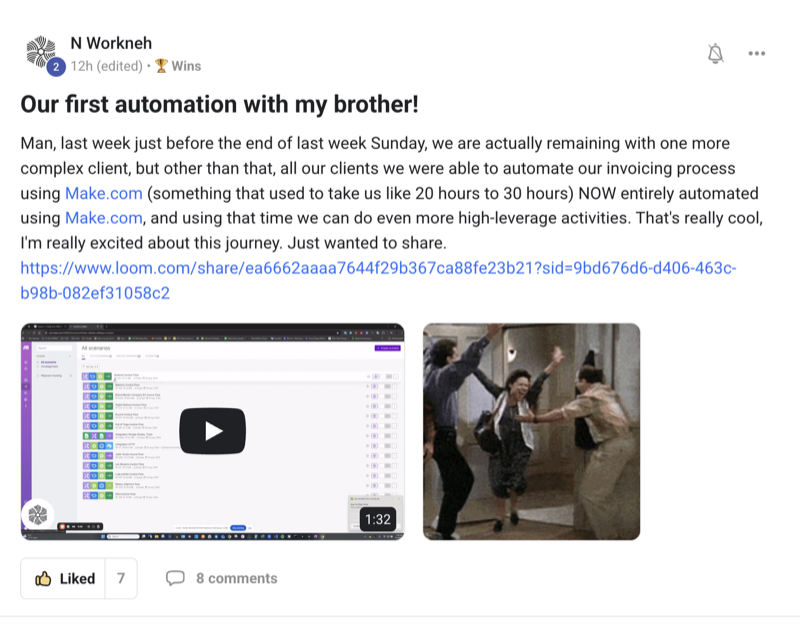
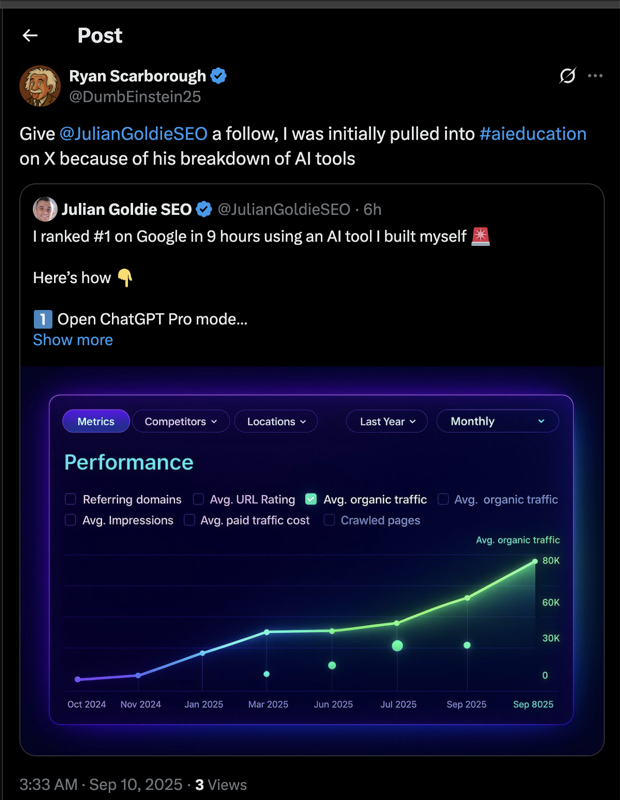
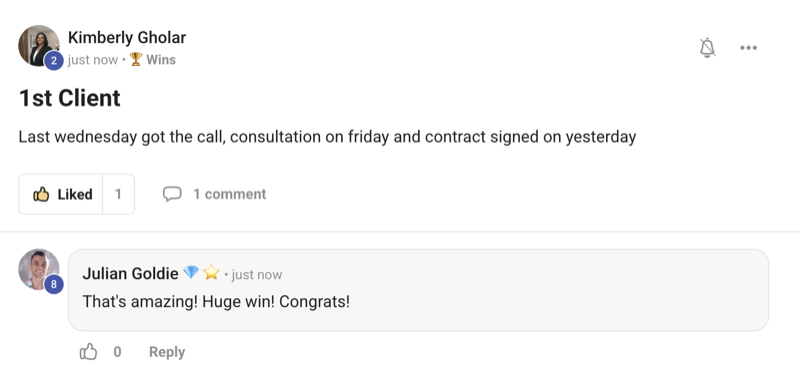
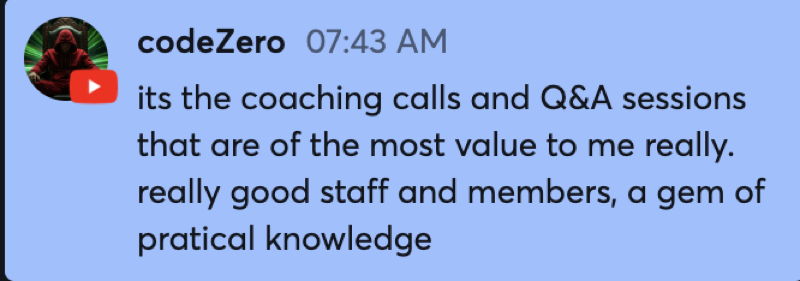
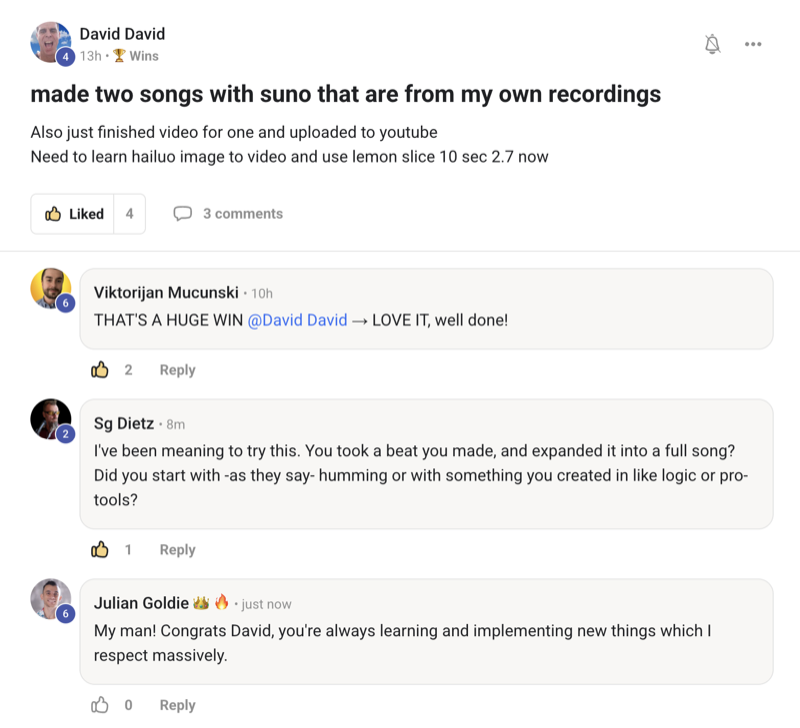
Real wins from inside the AI Profit Boardroom
See all 3,000+ members →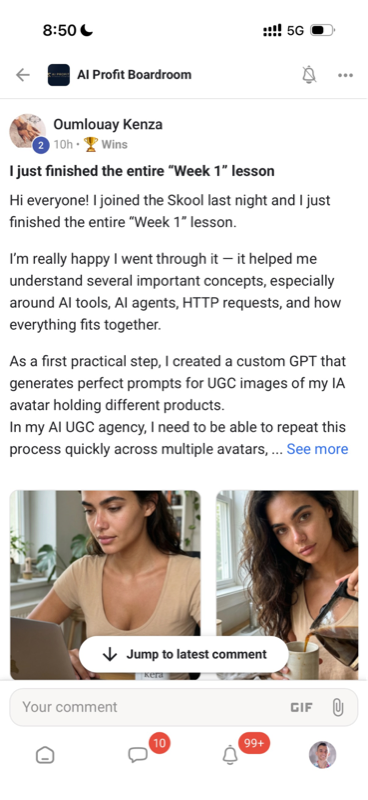
Ready To Join The #1 AI Community?
Join 3,600+ entrepreneurs inside the AI Profit Boardroom. Get 1,000+ plug-and-play AI agent workflows, daily coaching, and a community that holds you accountable.
Join The AI Community →7-Day No-Questions Refund • Cancel Anytime
Wait — before you leave
Get the entire AI Profit Stack for $59/mo locked
- 🎯 1,000+ done-for-you AI agent workflows
- 📅 5 live coaching calls per week with me
- 👥 3,000+ AI operators inside
- 🛡️ 7-day refund + 30-day ROI guarantee