Every few months a new AI coding tool blows up on GitHub, and most of them are forgettable. The jcode coding agent harness is the exception worth your attention: a free, open-source terminal agent that has pulled in around 15,000 GitHub stars since launch, and one that claims to be both the most RAM-efficient and the most intelligent harness you can run. That double claim is JCode's own positioning, not an independent verdict — but the engineering underneath it is genuinely interesting.
📺 Watch: Jcode DESTROYS Claude Code?
🔥 Get the Agent OS as a free bonus: AI Profit Boardroom members get the full Agent OS zip, prompt libraries, daily tutorials and weekly live coaching calls. → Get inside
Julian Goldie has been testing JCode hands-on inside his own systems, so this guide covers what it actually does, what the 245x speed claim really means, and whether it makes sense for you to switch.
What is the jcode coding agent harness?
JCode is a terminal-based AI coding agent that works exactly like Claude Code. You point it at a project, give it a task, and it reads your files, writes new ones, runs commands, and keeps looping until the job is done. It installs with a single command.
The difference is the packaging. A harness is the body around the AI model: the software that manages context, files, tools and sessions. JCode's bet is that the body should be as light as possible, so the model — the brain — does the heavy lifting while the harness stays out of the way.
It is completely free and open source, which partly explains why it has been trending on GitHub since the day it launched.
The 245x Speed Claim, Explained Honestly
Here is the headline number. According to JCode's own published tests and estimates, its time to first frame is around 14 milliseconds. The same tests put Claude Code at roughly 3,436.9 milliseconds. That works out at roughly 245 times faster to first response.
Worth repeating: those are the project's own benchmarks, not an independent lab result. Treat them as JCode's claim until third parties verify them.
Julian's honest framing is the useful one. A fast harness does not make the model smarter or quicker at reasoning — the model still does the actual thinking, and that takes however long it takes. What you get, in his words, is "a frontier brain in a body that weighs 14 times less". The interface snaps instantly; the intelligence is unchanged.
📺 Watch: Orca: NEW AI Coding Agent is INSANE!
You Are Switching the Harness, Not the Brain
The best part of JCode is what it does not ask of you: there is no new subscription to buy.
JCode runs on the AI subscriptions and CLIs you already have. Julian ran it through the Claude SDK with Opus 5 as the brain, and it also works with ChatGPT or Gemini accounts. Same model, same intelligence, different body.
The RAM story is where that body really matters. A single Claude Code session can sit at around 387MB of memory. JCode sessions are tiny by comparison, which means you can run many of them at once — even on a weaker machine that would struggle under two or three heavyweight sessions.
JCode vs a Heavyweight Harness
| Factor | JCode | Heavyweight harness (e.g. Claude Code) |
|---|---|---|
| Price | Free and open source | Included with your existing AI subscription |
| Time to first response | Around 14ms, per JCode's published tests | Around 3,436.9ms in those same tests |
| RAM per session | Tiny — built for many parallel sessions | Around 387MB for a single session |
| The brain | Your existing Claude, ChatGPT or Gemini subscription | Tied to its own ecosystem |
| Multi-agent work | Native swarm mode with a managing server | Every extra session multiplies the RAM cost |
| Memory | Automatic memory graph across sessions | Memory files and tools you manage yourself |
| Install | One command | One command |
The speed and memory figures above are JCode's published numbers plus observations from Julian Goldie's own sessions, so read them as the project's claims rather than independent measurements. The pattern they describe, though — light body, same brain — matches how the tool feels in use.
📺 Watch: Orca: FREE AI Coding Agent (Open Source!)
Swarm Mode: A Coding Team Inside One Repo
This is the feature that turns the low RAM usage from a nice-to-have into the whole point.
JCode lets you spawn two or more agents inside the same repository, with a server that manages them natively. They are not isolated workers blindly stepping on each other's changes — they are aware of each other.
- If agent A edits a file that agent B has already read, B gets notified and can check the diff before carrying on.
- Agents can direct-message each other to coordinate, or broadcast to the whole swarm at once.
- Any agent can spawn new teammates when the workload calls for it.
Combine that with sessions light enough to run in bulk and you get the real pitch: not one faster agent, but a whole team of them running on hardware that previously struggled to host a single heavyweight session.
The Memory Graph: It Remembers Without Being Asked
Most coding agents handle memory through tools. The model has to decide to save a note, then remember to look it up later, and every one of those calls costs tokens. JCode takes a different route.
Every turn of the conversation is embedded as a semantic vector into a graph of memory. Each new turn quietly queries that graph and injects whatever is relevant into context. There are no memory tools for the model to call, which means fewer tokens spent on bookkeeping — and it remembers past sessions automatically.
In the background, a side-agent watches for semantic drift — the moment the conversation moves onto something new — and extracts fresh memories at that point. It also consolidates older memories over time, catching stale facts and conflicts between them. You do not manage any of this; it simply accumulates while you work.
📺 Watch: Vibe Coding a NEW Claude Agent OS!
How Julian Goldie Actually Runs JCode
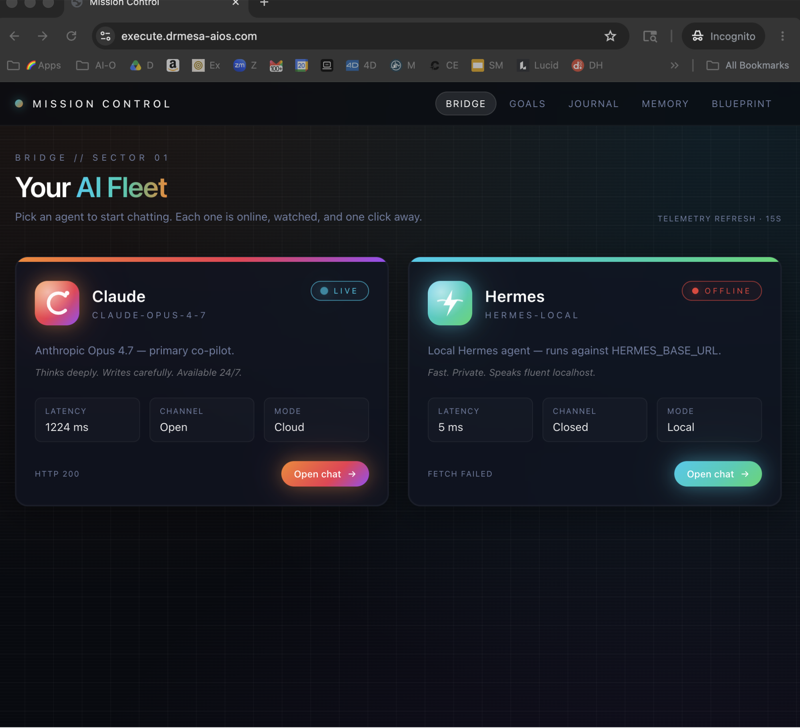
Julian did not test JCode in a vacuum. It now sits as a tab inside his Agent OS, the operating system he uses to run AI agents across his whole business, with a workspace and full session history built in.
The output was the convincing part. While he talked, JCode built genuinely nice, non-generic website designs and a complete landing page — the kind of work that does not look like a template. On Goldie Bench, Julian's own hands-on testing setup for AI coding tools, that build quality was what stood out most. That is his verdict from his own testing rather than an objective benchmark, but it is a strong signal that the lightweight body is not cutting corners on results.
If you want a lightning-fast coding team making you money, check out the AI Profit Boardroom — the complete Agent OS plus JCode swarm system is inside, ready to copy. → Get the JCode swarm system here
Who Should Actually Switch?
The sensible read of the numbers is that a lightweight harness matters most in two situations.
- You run many agents at once. Swarms multiply RAM usage, so a tiny session footprint is the difference between running three agents and running thirty.
- You work on a modest machine. If your laptop groans under one 387MB session, JCode removes that ceiling entirely.
If you run a single session on a powerful machine, the day-to-day difference is smaller: the model's thinking time dominates, whichever harness you use. Since JCode is free, open source and installs in one command, the cost of finding out where you sit is close to zero.
Frequently Asked Questions
Is JCode free?
Yes. JCode is free and open source, and it has picked up around 15,000 GitHub stars since launch, trending on GitHub in the process.
Do I need a new subscription to use JCode?
No. JCode runs on the subscriptions you already have — Claude, ChatGPT or Gemini. Julian ran it with the Claude SDK and Opus 5. You are swapping the harness, not the model.
Is JCode really 245 times faster than Claude Code?
That figure comes from JCode's own published tests, which put its time to first frame at around 14 milliseconds against roughly 3,436.9 milliseconds for Claude Code. It measures how quickly the harness responds, not how quickly the model thinks — reasoning speed still depends on the model you connect.
What is swarm mode in JCode?
Swarm mode lets you run two or more JCode agents in the same repository, managed natively by a server. Agents get notified when a teammate edits a file they have read, can message each other directly or broadcast to the group, and can spawn new teammates as needed.
Does JCode remember past sessions?
Yes, automatically. Every turn is embedded into a memory graph, and each new turn pulls in whatever is relevant with no memory tools and fewer tokens. A background side-agent extracts new memories when the topic shifts and consolidates old ones, catching stale or conflicting facts.
The Bottom Line
JCode is not a smarter AI. It is a lighter body for the intelligence you already pay for — free, open source, one command to install, with a native swarm mode and an automatic memory graph that heavyweight harnesses do not offer out of the box.
Hold the speed numbers loosely, because they are the project's own. But the direction is hard to argue with: the same frontier brain, a fraction of the weight, and enough headroom to run a full team of agents on an ordinary machine. That is exactly the direction Julian Goldie has been betting on with Agent OS — and JCode just made that bet cheaper for everyone.