opencode omniroute is the two-part setup I keep coming back to when I want a serious AI coding agent that costs nothing to run. OpenCode is the agent that does the building. OmniRoute is the free router that feeds it models. Put them together and you get a 100% free coding stack that survives rate limits and can swap its own brain from a dropdown. Here is how the pieces fit, and where they sit inside a bigger agent setup.
📺 Watch: Omniroute + OpenCode: 100% FREE AI Coding Setup!
🔥 Get the Agent OS as a free bonus: AI Profit Boardroom members get the full Agent OS zip, prompt libraries, daily tutorials and weekly live coaching calls. → Get inside
What OpenCode Is
OpenCode is an open-source coding agent that lives in your terminal. If you have used Claude Code, the shape of it will feel immediately familiar — you talk to it in plain language, it reads your project, writes files and runs commands for you.
The difference that matters is efficiency. OpenCode is noticeably more token-efficient than Claude Code: it gets through the same work using fewer tokens. When you are running on free models with limits attached, that is not a nice-to-have. Fewer tokens per task means more tasks before anything throttles you.
On its own, though, OpenCode has one weak spot. It ships with a few free models built in, and those free models are exactly as dependable as free models usually are.
The Problem OmniRoute Fixes
OpenCode's built-in free option — Big Pickle is the one most people land on first — works beautifully right up until it does not. You get rate-limited mid-build, or the model simply stops responding, and your agent grinds to a halt halfway through a feature.
That is the entire reason to put a router in front of it. When a model dies, you do not want to be reinstalling anything, hunting for a new API or rewriting config. You want a dropdown.
What OmniRoute Actually Does
OmniRoute is a free router that runs locally on your own machine. Think of it as a switchboard sitting between your coding agent and every model provider on the internet.
- 290 providers supported, and 90 of them are free.
- 500+ models built in and ready to select.
- Automatic fallbacks — if a model fails, the router moves to the next one instead of dumping an error in your terminal.
- It speaks the same API language as the paid APIs, so OpenCode just points at it and starts working.
That last point is the quiet genius of the whole thing. You are not waiting for anyone to officially support a new model. As far as OpenCode is concerned it is talking to a perfectly normal API endpoint. That endpoint happens to be running on your own laptop, and behind it sit hundreds of options.
So when Big Pickle stalls, you open the dropdown and pick something else. North Mini Code, DeepSeek V4 Flash, Nemotron-3 Ultra — free, and a couple of clicks away. The agent carries on as if nothing happened, and you have not paid for anything.
How The opencode omniroute Stack Is Layered
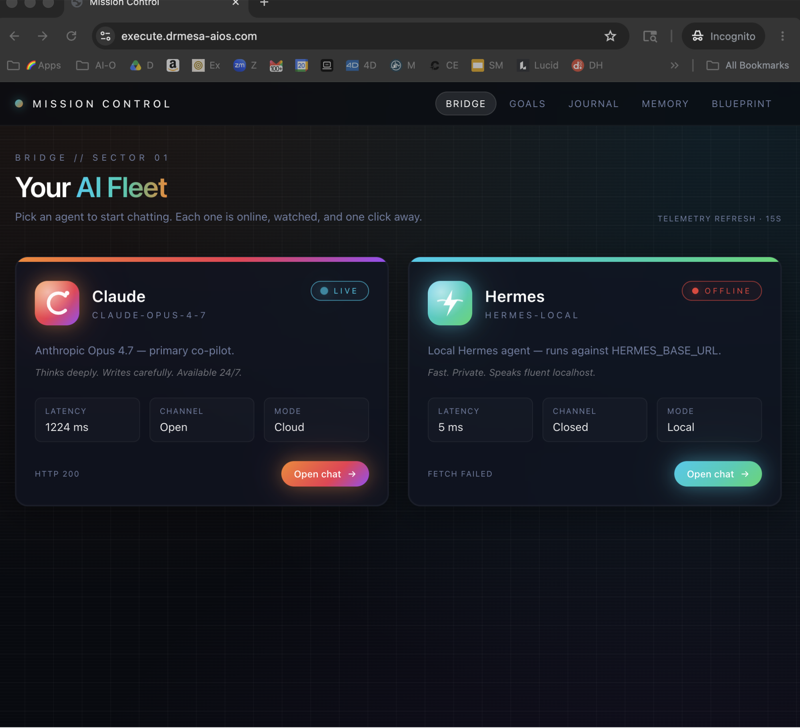
It helps to stop thinking of this as two tools and start thinking of it as three layers, because that is what it really is. The router is OmniRoute. The harness — the coding agent itself — is OpenCode. And mission control is the Agent OS, where your workspace, your memory system and all of your agents live together in one place.
| Layer | What it is | Its job |
|---|---|---|
| 1. The router | OmniRoute | Picks and supplies the model, with automatic fallbacks when one fails |
| 2. The harness | OpenCode | The coding agent that reads the project, writes the files and runs the commands |
| 3. Mission control | Agent OS | The workspace, the memory system, previews, and every agent in one window |
Most people set up layers one and two, get a working free agent, and then wonder why the whole thing still feels scrappy. Layer three is what turns a clever trick into something you can actually work in every day.
📺 Watch: OmniRoute: New FREE Unlimited AI Coder!
Why Run It Inside The Agent OS
My honest complaint about most AI coding tools is that you build something good and then cannot find it again. It is somewhere in a folder, in a session, in a tab you closed. Running the stack inside a proper workspace fixes that, and adds a few things on top.
- Everything is saved and organised in one workspace. Every build you produce has a home, so you can come back to it next week and it is still there.
- Full-screen previews. You can look at what the agent just built properly, rather than squinting at a sliver of a pane.
- One switch between terminal and workspace. Coding on one side, the thing you are building on the other.
- Several agents in parallel. Hermes, Claude and Antigravity can all be working at the same time alongside OpenCode, instead of you jumping between five different apps and dashboards.
That last one is the real unlock. The bottleneck in AI building is rarely the model any more — it is you, tabbing between tools and losing your place.
📺 Watch: Google Gemini Flash + OpenCode is INSANE! 🤯
Do The Free Models Actually Build Anything Good?
This is the question everyone asks, and it deserves a straight answer rather than a sales pitch.
No, these free models are not frontier-level. They are not Fable 5. If you are doing something genuinely hard — a gnarly refactor across a large codebase, subtle architectural decisions — you will feel the gap.
But in my own hands-on Goldie Bench testing, running real builds through this stack rather than benchmark prompts, the free models held up far better than I expected. They produced genuinely good work: functional, decent-looking builds that did what I asked. Not frontier, but nowhere near the throwaway quality people assume when they hear the word free.
My rule of thumb: use the free stack for volume, prototypes, small tools and the first pass on anything. Bring the paid agent in when the problem is genuinely hard.
The Honest Objections
Will running a local router slow my machine down?
No. OmniRoute is lightweight. It is a router, not a model — the models themselves still run in the cloud. Your machine is only passing requests along, so a normal laptop will not notice it is there.
There is an API key, so it is not really free
There is an API key, and it is worth being clear about what it does. The key authenticates you to your own local router. It is not a subscription, and you are not handing anything to a paid middleman. The router lives on your machine, the free providers stay free, and nothing gets billed.
Does this replace Claude Code?
It does not, and it is not meant to. This runs alongside Claude Code. That is the point of doing it inside a workspace that supports parallel agents — you can have OpenCode on free models grinding through one job while Claude Code handles another. Two agents working at once beats one agent working perfectly.
If you want a 100% free AI coding setup that makes you money, check out the AI Profit Boardroom — the Agent OS with the free OpenCode engine inside, plus the workflows I use to turn builds into income. → Get the free coding stack set up here
Frequently Asked Questions
Is this setup genuinely 100% free?
Yes. OpenCode is open source, OmniRoute is a free router that runs locally, and 90 of the 290 providers it supports are free. You are not paying a subscription to any of the three layers.
Why not just use OpenCode's built-in free models?
You can, and it works until it does not. Built-in free models like Big Pickle get rate-limited or stop responding. The router exists so that when that happens you change the model from a dropdown and keep going.
How does OpenCode know how to talk to OmniRoute?
OmniRoute speaks the same API language as the paid APIs. OpenCode points at it exactly as it would point at any other endpoint, which is why the setup is so short.
What happens if the model I picked fails mid-task?
OmniRoute has automatic fallbacks. If a model fails, it routes to another one rather than handing you an error and stopping the build.
Which free models are worth trying first?
Big Pickle is the obvious starting point inside OpenCode. Once the router is in place, North Mini Code, DeepSeek V4 Flash and Nemotron-3 Ultra are all worth a run — try a few on your own project and keep whichever handles your work best.
Do I need the Agent OS to use this?
Not to make it work. You need it to make it pleasant. Without a workspace you get a free coding agent in a terminal; with one you get saved builds, full-screen previews and several agents running side by side.
The Bottom Line
The opencode omniroute combination is the cheapest genuinely useful coding setup I have run: a token-efficient open-source agent in your terminal, fed by a local router with 500+ models and 90 free providers behind it. Big Pickle throttles you, you switch to North Mini Code, and the work continues.
Remember the three layers. Router, harness, mission control. Get the first two working and you have a free agent. Add the third and you have somewhere for everything it builds to live, with Hermes, Claude and Antigravity working next to it. That is when a free stack stops being a novelty and starts being the way you actually build.