Set the environment variable CLAUDE_CODE_MCP_STARTUP_WAIT_MS before launching a headless run and Claude Code will only wait that many milliseconds for MCP servers to connect before the first turn proceeds — set it to 0 and it does not wait at all. That is the new claude code mcp server startup timeout control, added in v2.1.274 on 17 September 2026, which the official Anthropic changelog describes as bounding "how long the first non-interactive turn waits for connecting MCP servers".
📺 Watch: NEW Claude Update ACTUALLY CHANGES EVERYTHING!
🔥 Get the Agent OS as a free bonus: AI Profit Boardroom members get the full Agent OS zip, prompt libraries, daily tutorials and weekly live coaching calls. → Get inside · Want AI SEO help 1-on-1? Book a free SEO strategy session →
What the Claude Code MCP Server Startup Timeout Fixes
In an interactive session, a slow MCP server is an annoyance you can see: the session sits there, you notice, you investigate. In a non-interactive run — a cron job, a CI step, a scheduled automation firing Claude Code with a prompt and no human watching — a slow or dead MCP server is invisible. The first turn quietly waits for servers to finish connecting, your pipeline stalls, and every second of that wait is billed time on your runner with nothing to show for it. The claude code mcp server startup timeout puts a hard bound on exactly that wait. Per the changelog wording, it applies to "the first non-interactive turn", which is precisely where unbounded waiting hurts: automation that cannot see what it is stuck on.
This lands in a busy week for Claude Code plumbing — the neighbouring v2.1.275 release (17 September 2026) added syncing of claude.ai skills and plugins into terminal sessions, and v2.1.274 itself also added a visible warning when memory usage turns critical. The direction is consistent: making Claude Code behave predictably when it runs as infrastructure rather than as a chat window.
How to Set CLAUDE_CODE_MCP_STARTUP_WAIT_MS
It is an environment variable, so it goes wherever your automation's environment is defined rather than in a settings file:
- One-off shell run: prefix the command — CLAUDE_CODE_MCP_STARTUP_WAIT_MS=5000 claude -p "your prompt" — and that run waits at most five seconds for MCP servers.
- Cron jobs and schedulers: export the variable in the script the scheduler executes, so every fired run inherits the same bound.
- CI pipelines: declare it in the job's environment block alongside your other variables, which keeps the timeout visible in the same file as the workflow it protects.
- Skip waiting entirely: the changelog notes that 0 means "don't wait" — the first turn starts immediately, whether or not MCP servers have finished connecting.
Choosing the number is a trade, and it is worth making deliberately. A generous bound — say ten seconds — suits pipelines whose prompts genuinely depend on MCP tools being available from the first turn. A zero suits runs where MCP tools are optional enrichment: start now, and if a server was not ready, that turn simply proceeds without it. What you are eliminating in both cases is the unbounded middle, where a misbehaving server decides your pipeline's runtime for you.
If you want AI automations that run reliably while you sleep — the exact workflows, configs and prompt systems behind these tutorials — check out the AI Profit Boardroom. Rather have Julian's team look at your automation and SEO setup 1-on-1? Book a free SEO strategy session.
When a Startup Timeout Is the Right Fix
Use the claude code mcp server startup timeout when the symptom is a slow or hung first turn in headless runs. Three situations show up repeatedly:
- A remote MCP server with variable latency. Hosted servers connect in milliseconds one hour and time out the next. Bounding the wait means your worst case is your chosen number, not theirs.
- A config that accumulated servers. MCP configs grow — every experiment adds a server, and each one is another connection your first turn may wait on. A bound keeps the cost of an untidy config capped while you get around to pruning it.
- High-frequency scheduled runs. If a job fires every few minutes, even ten wasted seconds per run compounds into real runner time. Scheduled pipelines like the Gauntlet Loop are exactly where a fixed startup bound turns runtime from a variable into a constant.
What this setting does not fix is a server that is genuinely broken. If a tool your prompt requires never connects, bounding the wait converts a hang into a fast failure — which is better, but the repair is still on the server side. For the Hermes side of the same architecture, the Hermes MCP server guide covers how these servers expose tools in the first place, which is useful mental furniture even when your client is Claude Code.
Fitting the Timeout into a Headless Stack
A dependable non-interactive Claude Code setup tends to combine a handful of pieces, and this variable is the newest: bounded MCP startup for predictable first turns, synced skills so terminal sessions carry the same capabilities as your claude.ai account, and remote session control when you need to steer from elsewhere — forking a remote-control session covers that last piece. Structure is the remaining ingredient: Agent OS is the operating layer that decides what those headless runs actually work on each day, and the Goldie Bench write-up covers how the current model brains compare in hands-on tests when you are deciding which model those automated turns should run on.
If you are earlier in the journey, start smaller than a full pipeline: learn Claude Code interactively first, because a headless run is just an interactive session with nobody there to catch mistakes — every rough edge you have not met in person becomes a silent failure in automation. Local model runners deserve the same treatment; the ollama create command guide shows the equivalent discipline applied to local models, where startup behaviour is likewise something you configure rather than hope about.
Working Out Whether MCP Startup Is Your Bottleneck
Before tuning the claude code mcp server startup timeout, spend two minutes confirming that startup waiting is actually where your headless runs lose time. The method is unglamorous: time a full run of your normal job, then time the same prompt with your MCP servers temporarily removed from the config, and compare. If the gap is seconds, the wait for connecting servers is your problem and a bound will claw it back. If the two runs land close together, your time is going into the work itself — model turns, tool calls, the task — and no startup setting will change that. Measurement first, configuration second; the variable is a fix for a specific wait, not a general speed lever.
It is also worth separating slow from broken. A server that connects slowly benefits from a generous bound; a server that never connects benefits from being removed, because every future run pays for its absence at whatever bound you set. Removal is likewise the honest fix for servers added during an experiment weeks ago and never used since — the leaner the config, the less this variable has to protect you from, and the faster every first turn gets regardless of any timeout.
Claude Code MCP Server Startup Timeout: Quick Answers
What exactly does it bound? How long the first non-interactive turn waits for connecting MCP servers, per the v2.1.274 changelog entry — it is not a per-call tool timeout and not an interactive-session setting.
What unit is it in? Milliseconds — the MS suffix in the variable name. Five seconds is 5000, ten seconds is 10000 — and if a bound that generous still gets hit regularly, the server itself deserves your attention more than the number does.
What does 0 do? The changelog states it plainly: 0 means don't wait. The turn starts regardless of MCP connection state.
Do interactive sessions need it? Generally no — you can see and interrupt a slow start yourself. It exists for the runs nobody is watching.
Does it affect later turns? The changelog scopes it to the first non-interactive turn — the wait that happens while servers are still connecting at startup. Once a session is past that point, this bound has done its job.
Where did it ship? Claude Code v2.1.274, 17 September 2026, per the official changelog.
If you want a business where the automations genuinely run without you — configs, daily tutorials and weekly live coaching included — join the AI Profit Boardroom and grab the full Agent OS bonus inside. And to get your automation and SEO roadmap mapped personally, book a free SEO strategy session.
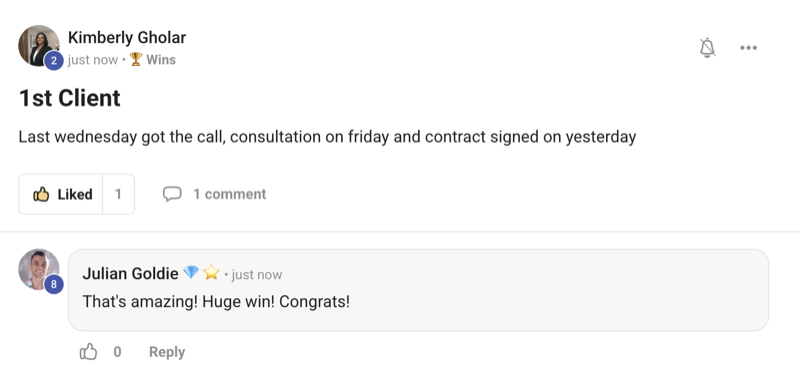
Real wins from inside the AI Profit Boardroom
See all 3,000+ members →





Ready To Join The #1 AI Community?
Join 3,600+ entrepreneurs inside the AI Profit Boardroom. Get 1,000+ plug-and-play AI agent workflows, daily coaching, and a community that holds you accountable.
Join The AI Community →7-Day No-Questions Refund • Cancel Anytime

Wait — before you leave
Get the entire AI Profit Stack for $69/mo locked
- 🎯 1,000+ done-for-you AI agent workflows
- 📅 5 live coaching calls per week with me
- 👥 3,000+ AI operators inside
- 🛡️ 7-day refund + 30-day ROI guarantee