Big update: Claude Cowork memory is now live across the cloud — according to Anthropic's official release notes dated 25 August 2026, memory now works across chat and Cowork in the cloud, everything Claude remembers is listed under Topics in the memory settings where you can edit or delete any item, sensitive topics such as health or beliefs stay out of memory unless you switch on a dedicated setting, and memory is on by default for Free, Pro and Max plans while staying off by default for Team and Enterprise organisations. In plain English: the agentic side of Claude — the one that actually does work in sessions rather than just chatting — now remembers you, and you get a visible, editable list of what it knows. For anyone using Cowork to run real business tasks, this is the update that makes sessions compound instead of restarting from zero.
📺 Watch: NEW Claude Cowork Update is CRAZY GOOD
🔥 Get the Agent OS as a free bonus: AI Profit Boardroom members get the full Agent OS zip, prompt libraries, daily tutorials and weekly live coaching calls. → Get inside
I have been running Cowork sessions on real work — content, research, admin — since it rolled out beyond the desktop, and the missing piece was always continuity between sessions. Here is what the release notes actually say, how the memory controls work, and what I would set up first.
What the Claude Cowork Memory Update Includes
The official release notes entry — titled memory in Claude Cowork, editable topics, and a sensitive topics setting — makes four concrete promises:
- Memory spans chat and Cowork in the cloud. What Claude learns about you is no longer siloed in the chat product: Cowork sessions draw on the same memory.
- A visible list of everything remembered. Every item lives under Topics in the memory section of settings, and per the release notes you can edit or delete any item.
- Sensitive topics stay out by default. Topics such as health or beliefs are excluded from memory unless you deliberately switch on the include-sensitive-topics setting.
- Sensible plan defaults. Memory is on by default for Free, Pro and Max plans, and off by default for Team and Enterprise organisations — so businesses opt in rather than discover it later.
Worth adding for context: Anthropic's earlier release notes describe how this memory works under the hood — since the July update, memory operates as a set of individual, categorised entries that Claude reads and updates during your conversations, replacing the previous daily summary approach. That is why the Topics list can exist at all: memory is discrete entries, not a blob.
Why Memory Changes What Cowork Is For
Cowork was already the most business-ready surface of Claude. Per Anthropic's release notes from July, Cowork runs on web, desktop and mobile, sessions run remotely in the cloud so work continues when you close your laptop, and scheduled tasks run with no device online. Add persistent memory to that and the shape changes: a remote worker that keeps working when you leave and now also remembers your business between shifts.
The practical difference is the first ten minutes of every session. Without memory, that time goes on re-explaining context — who your customers are, what tone you write in, which project matters this week. With memory, the session opens already briefed. I have banged this drum for years about agents generally: memory is the feature that makes the difference compound. It is the exact thesis of my Hermes memory system guide — an agent that starts from everything it has learned beats an agent that starts from zero, every single day.
If you want Cowork and the rest of your AI stack doing profitable work — my workflows, prompt libraries, the full Agent OS bundle and weekly live coaching calls — I walk members through it inside AI Profit Boardroom → Set up your AI workforce with me
The Controls: Topics, Editing and Sensitive Data
The control surface matters as much as the feature, and the release notes are specific about it. Everything Claude remembers is listed under Topics in the memory settings. You can open that list, read what the model believes about you and your work, and edit or delete any individual item. If Claude has remembered something wrongly — an old project, a stale preference — you correct the record directly.
The sensitive topics control deserves its own mention. By default, topics such as health or beliefs stay out of memory entirely; there is a specific setting — include sensitive topics in memory — you would have to switch on before Claude retains anything in those categories. Defaults like this are exactly right for a tool aimed at work contexts.
For teams, note the org default: memory is off by default for Team and Enterprise. If you run Cowork across a company and want shared-context benefits, someone has to make a deliberate decision to enable it — sensible, but easy to forget when you are wondering why your sessions seem forgetful. If your Cowork memory seems off, this default is the first thing to check.
📺 Watch: Claude Cowork Update: Run AI Agents Anywhere!
How I Would Set Up Claude Cowork Memory This Week
My suggested first moves, based on how I run every memory-capable agent in my business:
- Check it is on. Free, Pro and Max users have it by default; Team and Enterprise need an admin to enable it.
- Seed it deliberately. Spend one session telling Claude the durable facts of your business — what you sell, who you serve, how you write, what a good outcome looks like. Those become the entries every future session opens with.
- Audit the Topics list weekly. Open the memory settings, read what has accumulated, delete what is stale. Memory is compounding context, and like any compounding asset it needs occasional pruning — the same weekly habit I recommend for file-based agent memory.
- Leave sensitive topics off. For business use I see no reason to enable it. The default is the right setting.
- Pair it with an external brain. Platform memory is one layer; your own notes are another. I keep durable business knowledge in an Obsidian vault that agents can work with directly — my Claude Obsidian setup guide covers that build — so no single product holds the only copy of my context.
- Point the compounding at revenue. Memory is only valuable if the sessions it improves are doing valuable work. Seed it with the projects that actually pay — my guide to the best ways to make money with Claude is the menu I would pick from.
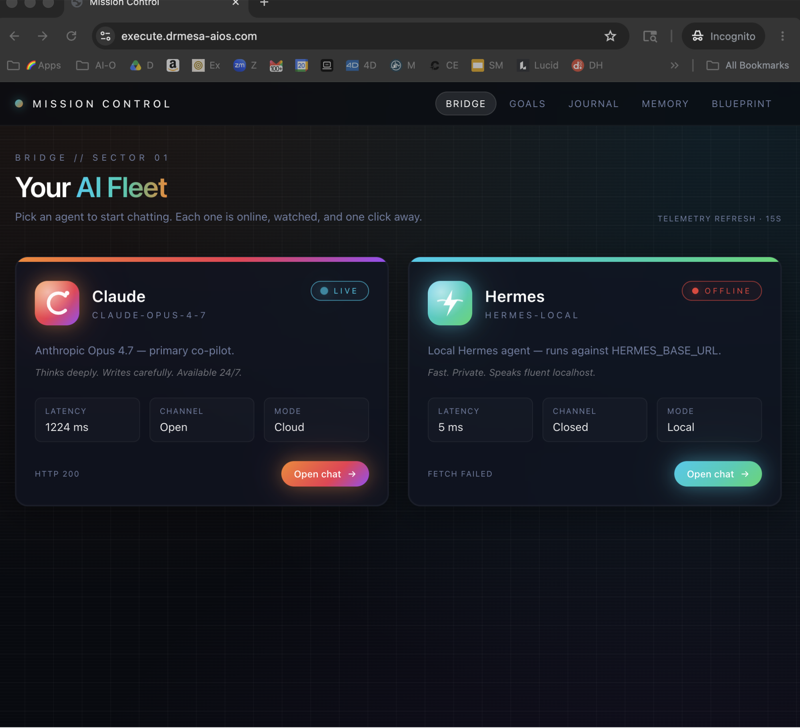
That last point is a principle worth stating plainly: platform memory is convenience, owned files are insurance. Use both. It is the same reason my Agent OS — my own operating framework for running agents — treats shared memory as a pillar alongside mission control and orchestration, with the durable copy always in files I control. Cowork's memory makes the convenience layer dramatically better; it does not replace the insurance layer.
Cloud Memory vs File-Based Memory
| Aspect | Claude Cowork memory | File-based agent memory |
|---|---|---|
| Where it lives | Your Claude account, in the cloud | Files on your own machine |
| Visibility | Topics list in settings; edit or delete any item | Open the file, read everything |
| Follows you | Across chat and Cowork on any device | Wherever you copy the folder |
| Sensitive data | Excluded by default, opt-in setting | Whatever you choose to write down |
| Best role | Convenience: sessions open pre-briefed | Insurance: context you own outright |
Claude Cowork Memory FAQs
Is memory on by default in Claude Cowork?
Per the official release notes: yes for Free, Pro and Max plans, no for Team and Enterprise organisations, where it is off by default and needs enabling.
Can I see and edit what Claude remembers?
Yes. Everything remembered is listed under Topics in the memory settings, and the release notes state you can edit or delete any item in that list.
Does Claude Cowork remember health or personal beliefs?
Not by default. The release notes state topics such as health or beliefs stay out of memory unless you switch on the include-sensitive-topics setting.
Does memory work across chat and Cowork?
Yes — that is the headline of the 25 August 2026 update: memory now works across chat and Cowork in the cloud, so both surfaces draw on the same knowledge of you.
Why does my Cowork session seem to remember nothing?
If you are on a Team or Enterprise plan, memory is off by default — check whether your organisation has enabled it. On personal plans, check the memory section in settings and confirm the feature is on.
Verdict: The Update That Makes Cowork Compound
Memory is the least glamorous feature Anthropic could have shipped and probably the most valuable. Cloud sessions that keep working when your laptop is shut were already useful; cloud sessions that remember your business turn Cowork into something closer to a colleague who improves with tenure. Seed the memory deliberately, audit the Topics list weekly, keep your own file-based brain as the durable copy — and if you prefer some of that stack fully on your own hardware, my Claude Code Local guide covers the self-hosted end of the spectrum. Every session you run from today makes the next one better. On my testing, that compounding beats a model upgrade — I would take an agent with a month of good memory on Goldie Bench, my own benchmark suite, over a fractionally smarter one that has never met me.
Ready to build an AI operation that compounds — memory, agents, workflows and weekly live coaching, with the full Agent OS bundle free when you join? Come inside AI Profit Boardroom → Start compounding with me