An Obsidian agentic OS uses Obsidian as the memory — the second brain — for your agent operating system, so every AI agent shares the same context. Obsidian is free and open-source, and wiring it into your Agent OS is what makes agents feel like they truly know you. Here's how it works and how to set it up.
📺 Watch: LIVE: Building Agentic Operating Systems with Claude
Want the Obsidian memory layer pre-wired into an Agent OS? Get it inside the AI Profit Boardroom. → Join AIPB
What Is An Obsidian Agentic OS?
It's an agent operating system with Obsidian as its memory layer. Obsidian stores everything as markdown files in a beautiful knowledge graph — every person, project, brand and tool as a linked note. Your agents read from and write to that vault, so they all work from one shared brain.
Why Obsidian For Agent Memory?
Because it's free, open-source, local (private on your machine) and markdown-based — exactly what AI agents parse well. Without a shared memory, Claude, Codex and Hermes don't sync; with an Obsidian vault, they all understand what you've worked on and give better, more personalised answers.
How To Wire Obsidian Into Your Agent OS
- Install Obsidian (free) and create a vault.
- Seed it — ask Claude or ChatGPT: "based on everything you know about me, create organised markdown files in my Obsidian vault."
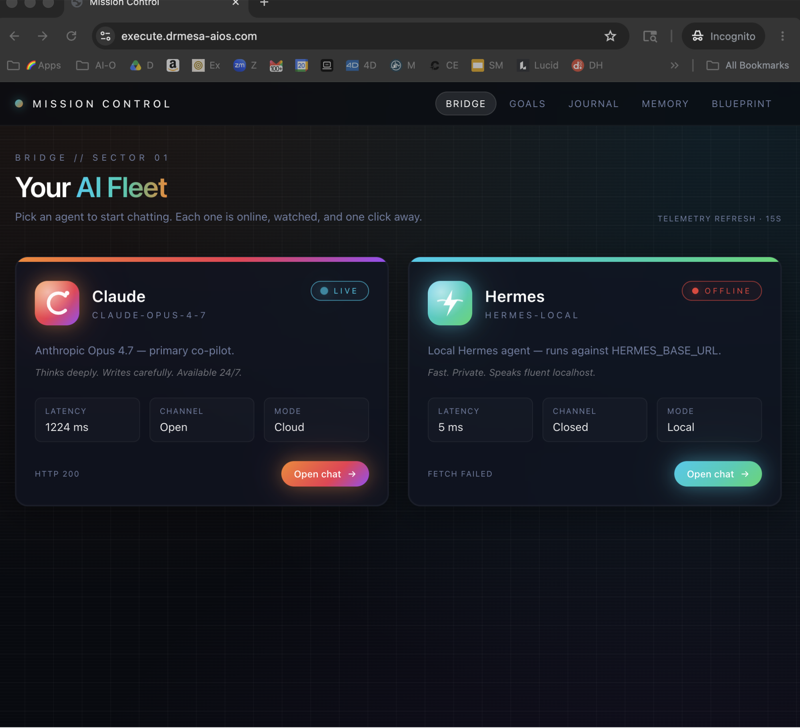
- Connect your agents — tell Hermes and Claude to use the local Obsidian folder as memory, reading it for context and updating it after each session.
See Hermes second brain for the memory setup in depth.
📺 Watch: Kimi K2.7 + Obsidian is INSANE
Auto-Capture Notes With Omi
To keep the vault fresh without effort, use Omi (a free, open-source, MIT-licensed tool). It listens and takes notes on what you're working on, then exports straight to Obsidian — so your memory updates itself.
📺 Watch: Hermes: Agent OS + Obsidian + FREE Apis + WebUI!
Sharing Memory Across Every Agent
The payoff: one Obsidian vault feeds Claude, Codex, Hermes and any future model. Switch tools and you lose nothing — the context travels with you. That's the whole point of an agentic OS: the system and its memory outlast any single model.
Get It Set Up
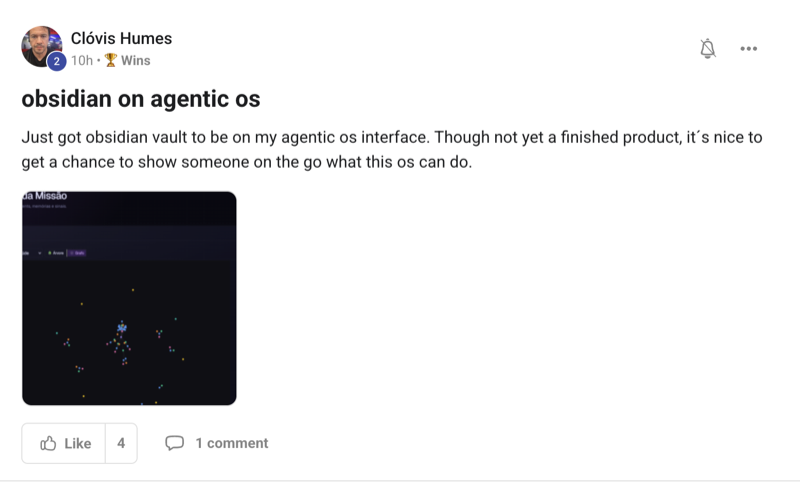
Our Agent OS ships with the Obsidian memory layer wired in — a memory galaxy every agent shares — inside the AI Profit Boardroom, with a video tutorial and install zip. → Join AIPB.
Frequently Asked Questions
What is an Obsidian agentic OS?
An agent operating system that uses Obsidian as its shared memory, so all your AI agents read from and write to one markdown knowledge vault and stay on the same context.
Why use Obsidian for agent memory?
It's free, open-source, local and markdown-based — ideal for AI agents to parse — and it links everything you work on so agents give more personalised answers.
How do I connect Obsidian to my agents?
Install Obsidian, seed the vault with an agent, then tell Hermes and Claude to use the local folder as memory (reading it for context and updating it after sessions). Omi can auto-capture notes into it.
The Bottom Line
An Obsidian agentic OS gives your agents a free, private, shared brain — one markdown vault every model reads from, so context outlives any single tool. Wire it in yourself, or get it pre-built in the Agent OS inside the AI Profit Boardroom.
Going Deeper: A Vault Blueprint Your Agents Can Trust
Knowing Obsidian can be your memory layer is one thing; keeping it tidy once several agents write to it daily is another. This section is the structure that makes it reliable: how to lay out the vault, stop an agent clobbering your notes, link at scale, and back it up so a bad edit is never permanent.
The Folder Structure
A flat pile of markdown works for a week, then becomes a swamp. Give the vault a handful of top-level folders and everyone, human or agent, knows where a note belongs.
- Daily — one dated note per day, the running log of what happened.
- Entities — one note each for the people, brands and tools that matter.
- Projects — one note per active piece of work, holding its goal, status and next steps.
- Agents — the instructions and session logs for each agent, so their behaviour lives in the vault too.
- Templates — the skeleton for each note type, so every new file starts consistent.
- Inbox — the single landing zone where agents drop new notes for you to file.
Daily Notes, Entity Notes And Project Files
Three note types carry most of the weight. A daily note is the timeline: what you worked on, decisions made, links out to the entities and projects it touched. An entity note is the durable record for one person, brand or tool — the facts that hold across projects. A project file is the working brief for one goal: a status line at the top, next steps at the bottom. Start every file with a small block of frontmatter — a few fields such as type, status and last-updated at the very top — so an agent can filter and sort the vault instead of re-reading every note.
How Agents Read And Write Without Breaking Things
The real fear with an agent editing your memory is that it overwrites something you needed. A few rules remove almost all that risk.
- Read before write. The agent loads the existing note first, so it edits with context rather than blindly replacing it.
- Append, do not overwrite. New material goes under a fresh dated heading at the bottom of a note, leaving the history above it untouched.
- Write to the Inbox first. Fresh notes land in one folder for you to file, not scattered across the vault.
- Use frontmatter for status. An agent flips a status field instead of rewriting prose, which is easy to read back and hard to get wrong.
- One section per agent. If two agents update the same note, give each its own labelled heading so edits never collide.
A Linking Strategy That Scales
Links turn a folder of files into a brain. The habit that pays off: link entities by name wherever they appear, so a brand note and every project mentioning it connect both ways through backlinks. Keep one map of content — a hub note linking to your main projects and key entities — as the front door an agent reads first. Use tags for state, not meaning: a tag marks active or archived, while links carry the relationships. Kept apart both stay useful; mixed together both turn to noise.
Backup And Versioning
Because every note is plain markdown, the vault suits version control perfectly. Put the folder under git and commit after each agent session: you get a full history where every change is a readable diff, so you can see exactly what an agent altered and roll back a single bad edit without losing anything else. Prefer not to touch git? A sync or snapshot tool that keeps file history gives the same safety net. Either way, nothing an agent writes should ever be unrecoverable.
An Example Workflow
A single day of the vault, end to end:
- Through the day, notes are captured and land in the Inbox as raw markdown.
- You file each one: a new tool becomes an entity note, a new goal becomes a project file, everything else appends to today's daily note.
- As you file, you link — the project note points to the tool, the daily note points to the project.
- The vault is committed to git at the end of the session, stamping a clean restore point.
- Next morning an agent reads the map of content, follows the links into the active projects, and picks up with full context.
If you want a shared agent memory that stays organised instead of turning into a mess you have to babysit, check out the AI Profit Boardroom — the Agent OS ships with this vault structure pre-built, wired to Hermes and your other agents, with the templates and safe-write rules already in place. → Set up my agent memory the right way
A Few More Questions
How do I stop an agent overwriting an important note? Make append-only the default and keep prose rewrites to a human. Agents change status fields and add dated sections; you handle rewrites. With git underneath, even a mistake is one revert away.
Should I use tags or links? Both, for different jobs. Links carry the relationships between notes; tags carry state such as active or archived. Keep that split and the vault stays searchable as it grows.
Will a big vault slow the agents down? Not if it is structured. Frontmatter and a map of content let an agent jump straight to the notes it needs, so size stops being the problem.
Can two agents write to the vault at once? Yes, as long as they write to different notes or different labelled sections. The folder layout and the one-section-per-agent rule exist precisely so simultaneous edits never collide.
Give the vault a clear structure, make agents append rather than overwrite, link by name, and keep it under version control — do that and Obsidian stops being a note app and becomes a durable shared memory your whole stack of agents can trust.