The Open Design vs Claude Design choice for automation workflows comes down almost entirely to API access and scriptability, and after running both in production pipelines I've got a clear view of where each one wins. This post breaks down the automation-focused 2026 comparison so you can stop guessing and pick the right tool.
This is the automation-focused view, covering API access, scripting, and scheduled generation rather than one-off design conversations.
🔥 Want my AI design automation skills? AI Profit Boardroom has my automation workflow templates plus weekly live coaching. → Get the templates
Open Design Vs Claude Design — Automation Quick Verdict
Open Design wins for automation because it has an open API, full scriptability, and integrates with anything you can call HTTP from. Claude Design wins for quick AI-driven design work that lives inside Claude conversations.
For pipelines and bulk generation, Open Design is the right call. For one-off design that lives inside chat workflows, Claude Design is fine.
Why Automation Changes The Decision
Manual design tools and automated design tools are genuinely different products even when they look similar. Automation cares about API access, scriptability, and determinism — three things that aren't on the marketing page but make or break a pipeline.
Open Design's open architecture is a natural fit for automation work, while Claude Design's proprietary nature limits some patterns even when the underlying model is excellent.
Watch The Test
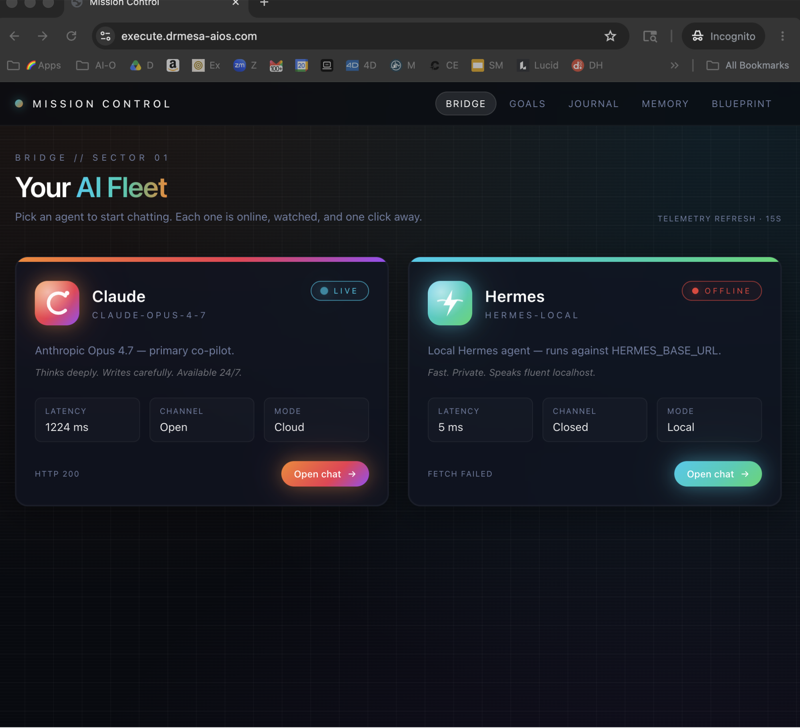
For Hermes-driven design automation, this walkthrough covers the agent layer that ties it all together.
The two videos together cover the full automation pipeline from agent to design.
Open Design Vs Claude Design — API Comparison
Open Design
Open Design ships with an open REST plus websocket API, and you can self-host the whole thing for full control. There are no rate limits when you're running on your own infrastructure, and every part of the system is programmatically accessible.
Claude Design
Claude Design is embedded inside the Claude API and is subject to Anthropic's rate limits across the board. Programmatic UI export is limited because the tool is designed for chat use rather than pipelines.
For pipeline work, Open Design wins decisively on the API surface alone.
Common Automation Use Cases
There are five things people automate that justify the design tool choice.
1 — Bulk landing page generation
A/B testing requires anywhere from 5 to 50 variants of a single page. Open Design's API generates them at scale in a single batch, while Claude Design forces you to do it manually one at a time.
2 — Template generation per customer
If you're sending 100 customers a custom landing page each, that's only realistic with Open Design's API and a script. Doing it manually in Claude Design is a part-time job.
3 — Scheduled creative refresh
Weekly auto-generated banners across your campaigns are trivial with Open Design plus a cron job. The pipeline runs Sunday night and you wake up to fresh creative every Monday.
4 — Email template generation
Per-campaign email templates can be auto-built when you wire Open Design to your email tool's API. Marketing teams ship campaigns 5x faster once this is running.
5 — Social asset batch creation
Daily Instagram and LinkedIn assets generated on a scheduler keep your social presence consistent without requiring a designer. Open Design plus a basic scheduler nails this.
For all five use cases, Open Design is the natural fit because the workflows are programmatic by nature.
Wiring To Hermes
Hermes can drive Open Design via API, and the skill structure is straightforward. The trigger is either a scheduled time or a real-world event, the action calls Open Design's API with a prompt, the response comes back, and Hermes deploys the output to its destination.
I cover the skill patterns in detail in Hermes AI Agent Framework 2026, which is worth reading before you wire anything in production.
For Claude Design integration, the surface is more limited because the tool is chat-based by design rather than pipeline-friendly.
Cost Of Automation
Open Design self-hosted
A modest VPS runs you £30-100/mo, the API calls themselves cost nothing once you're self-hosting, and you get unlimited generations within your hardware budget.
Claude Design via Anthropic
Claude Design via the Anthropic API is per-token, which means at 100+ designs a month you're easily looking at £200-500/mo with hard rate limits on top.
For high-volume automation, Open Design is dramatically cheaper without much of a quality compromise.
Reliability For Automated Pipelines
Open Design
Self-hosting Open Design means predictable behaviour, failure modes you actually control, and explicit versioning when you upgrade.
Claude Design
Claude Design depends on Anthropic's uptime, occasional rate-limit errors, and the API change cadence. You have less control when something goes sideways.
For mission-critical pipelines that can't afford to break, Open Design wins on reliability.
Determinism
Determinism is critical for automation because non-deterministic outputs cascade through your pipeline and create chaos.
Open Design
The same prompt produces the same output most of the time, and you can tweak seeds for full reproducibility when you need it.
Claude Design
Claude Design is LLM-driven from end to end, which means inherent variance in every output. It's less deterministic by design.
For brand-consistent automation where you need predictable creative, Open Design is the right call.
Setting Up An Automated Design Pipeline
There are five steps to get a working pipeline live in your first week.
Step 1 — Decide tool
Open Design is the default for automation work. Pick it unless you have a strong reason not to.
Step 2 — Self-host or hosted
Self-host once your volume crosses 30 designs a month. Below that, hosted is fine.
Step 3 — API key + auth
Set up your API key and lock down auth properly from day one. Cleaning this up later is painful.
Step 4 — Hermes skill
Build a Hermes skill that calls the API and handles the output cleanly with retry logic baked in.
Step 5 — Schedule
Wire it to a cron job or event trigger and let it run.
By the end of week one, you've got automated design generation running in production.
Common Automation Mistakes
There are three mistakes I see teams make repeatedly when wiring up design automation.
1 — Automating before validating
Build the workflow manually first and validate the output quality. Only then automate. Automating a broken process just produces broken outputs faster.
2 — Skipping QA in pipeline
Always have a human-review step before anything ships, especially for client-facing work. Auto-deploying creative without review is how you end up with embarrassing assets in front of customers.
3 — Over-automating styling
Brand consistency degrades over thousands of generations as the model drifts subtly each time. Schedule a periodic system review every few months to check the output still matches your brand.
When Claude Design Fits Automation
Claude Design has a niche fit for a few specific automation patterns.
1 — When designers chat-iterate
If your workflow is genuinely "describe, tweak, describe again", Claude Design's chat interface is excellent. That's not strictly automation, but it's high-leverage design work.
2 — When integrated with Claude Code
For tight Anthropic stacks, the Claude Code SEO Agent ecosystem fits Claude Design naturally because everything lives in the same API surface.
3 — When you don't want infrastructure
If self-hosting is too much overhead, Claude Design via API at low volume is reasonable. You pay per token but skip the infrastructure work entirely.
Hybrid Pipeline
Many teams automate Open Design for bulk generation and use Claude Design for last-mile polish on the winning variants.
The pipeline pattern looks like this. Hermes triggers Open Design via API to generate variants, Hermes selects the top variant based on whatever criteria you've defined, Claude Design polishes the winner if needed, and the final output ships to production.
That gives you the best of both — Open Design's volume and determinism plus Claude Design's chat-driven refinement on the assets that matter.
API Specifics — Open Design
The Open Design API basics: a POST to /generate with prompt and style ref returns image plus code, websockets stream progress for long-running jobs, and rate limits are non-existent when you're self-hosting.
API Specifics — Claude Design
Claude Design via the Anthropic API uses the standard messages endpoint with image generation enabled. It's rate-limited per tier, the output is image plus structured metadata, and there's no code export at present.
For pipeline work, Open Design's code export is the practical edge.
What I Run
My current automated design pipeline is structured around daily volume. Hermes triggers once a day, Open Design generates five landing page variants, the variants auto-deploy to staging, and a Slack notification with previews lands in my inbox. I pick the winner in five minutes and the system auto-promotes it to production.
Total time per day for me is about five minutes to pick a winner, with 5-10 designs generated. If I were doing this manually, it would be 4+ hours a day of design work I'd never have time for.
🚀 Want help building automated design pipelines? AI Profit Boardroom has weekly coaching where I'll wire your pipeline on a screen-share. → Join here
Scaling Up
Once the basic pipeline is humming, there are four phases worth working through.
Phase 2 — Multi-step
Generate, critique, then regenerate based on the critique. Quality goes up dramatically without human intervention.
Phase 3 — Multi-modal
Pull from research outputs into design briefs so the creative is informed by data rather than just prompt.
Phase 4 — Closed-loop
Test the variants in market, measure performance, and re-prompt with the winning patterns. The system learns what works.
Phase 5 — Full autonomous
The system generates, tests, deploys the winner, and reports back. By phase 5, you're running a closed-loop creative system without human intervention.
Privacy + Compliance
For sensitive industries, the choice gets sharper.
Open Design self-hosted
Data never leaves your infrastructure when you self-host, which makes Open Design compliance-friendly out of the box.
Claude Design
Claude Design routes through Anthropic and is subject to Anthropic's data policies, which may or may not work for your industry.
For finance, healthcare, or legal work, Open Design self-hosted is the safer choice.
FAQ — Open Design Vs Claude Design For Automation
Which has better API for pipelines?
Open Design wins clearly on API surface and pipeline-friendliness.
Which is faster per generation?
Claude Design via API is typically faster on raw generation speed.
Which scales better?
Open Design self-hosted scales further because there are no rate limits beyond your hardware.
Cost at 100 designs/month?
Open Design self-hosted runs about £100/mo, while Claude Design via API runs £200-500/mo at the same volume.
Which is more deterministic?
Open Design is more deterministic and supports seed control for full reproducibility.
Can I integrate either with Hermes?
Both integrate with Hermes, but Open Design fits more naturally into agent workflows.
Best for daily creative refresh?
Open Design with a cron job is the cleanest setup for daily refresh workflows.
Related Reading
- Hermes AI Agent Framework 2026 — the agent layer.
- Claude Code SEO Agent — content automation that pairs with this.
- Accomplish AI Vs OpenClaw — page-build automation.
📺 Video notes + links to the tools 👉
🎥 Learn how I make these videos 👉
🆓 Get a FREE AI Course + Community + 1,000 AI Agents 👉
For automation workflows in 2026, Open Design wins decisively — but pair it with Claude Design for last-mile polish on your hero assets and you'll get the best of both worlds.