Enable the optional OpenClaw team reports plugin — shipped with OpenClaw 2026.9.3 on 8 September 2026 — and your Gateway starts producing authenticated daily, weekly and monthly GitHub reports, plus digests of Discord sources you explicitly select, with stored history, optional summaries, people timelines and calendars, per the official release notes. That is the entire pitch: the morning ritual of trawling repos and channels to find out what your team and your agents actually did gets replaced by a report that arrives on a schedule and keeps its own history.
📺 Watch: OpenClaw 2.0 Is a MASSIVE Upgrade for AI Agents
🔥 Get the Agent OS as a free bonus: AI Profit Boardroom members get the full Agent OS zip, prompt libraries, daily tutorials and weekly live coaching calls. → Get inside · Want AI SEO help 1-on-1? Book a free SEO strategy session →
Everything factual here comes from the OpenClaw 2026.9.3 release notes, published on GitHub on 8 September 2026 — the plugin is brand new, so treat this as a launch-week orientation based on what the notes commit to, with the open questions flagged honestly rather than guessed at.
What the OpenClaw Team Reports Plugin Does
The release notes describe the plugin in one dense sentence: it provides "authenticated daily, weekly, and monthly GitHub reports and explicitly selected Discord sources, with stored history, optional summaries, people timelines and calendars." Each phrase in there is carrying weight, so it is worth unpacking. Authenticated means the reports are built from sources your Gateway is signed into, not from public scraping — which is what makes private repositories and members-only channels reportable at all. Daily, weekly and monthly means you choose the cadence per report rather than getting one firehose. Stored history means past reports remain browsable, so you can compare this week against last week instead of only ever seeing the latest snapshot. Optional summaries layer a condensed read on top of the raw activity, and people timelines and calendars organise the same activity by who did what and when, rather than only by repository or channel.
Two more facts from the notes matter for setting expectations. First, the plugin is optional — it is not part of core OpenClaw, so nothing changes for anyone who does not switch it on. Second, it arrived as part of the 2026.9.3 release line, so the features it depends on assume a current Gateway rather than an August build.
GitHub Reports on a Daily, Weekly and Monthly Cadence
A scheduled GitHub report earns its keep fastest in setups where more is happening in your repositories than any one person watches — which, once agents are writing code, is most setups. If OpenClaw sessions are opening pull requests, triaging issues or pushing fixes overnight, a daily digest is how a human stays credibly in the loop without living in the GitHub notifications tab; the weekly and monthly cadences map naturally onto sprint reviews and client reporting. The release notes do not enumerate every field a report contains, so resist the urge to assume — but the shape they do commit to, cadenced reports with people timelines, calendars and stored history, maps directly onto the questions team leads actually ask: what shipped, who did it, when, and how does that compare with last period.
Choosing a cadence is worth a moment of thought rather than defaulting to daily for everything. A daily GitHub report suits repositories where agents or contractors commit around the clock and you need to catch a bad direction within hours. Weekly suits the review rhythm most teams already run, and the monthly report is the one you forward — to a client, a partner or your own records — because stored history means the numbers behind it stay checkable later. Since the plugin supports all three cadences side by side, the sensible setup is different cadences for different audiences rather than one report trying to serve everyone.
If you want AI systems that report to you — instead of you reporting to your dashboards — check out the AI Profit Boardroom → get the automation playbooks and weekly coaching. Want a 1-on-1 look at your setup first? Book a free SEO strategy session and map your stack with Julian.
Discord Sources Are Explicitly Selected — and That Is the Right Default
The wording on Discord is deliberate: reports cover "explicitly selected Discord sources", not every server your account can see. Nothing gets reported on unless you choose it, which is the correct privacy default for a tool that might sit inside community servers you do not own. For anyone running a paid community or a support server, the use case writes itself — a weekly digest of the channels that matter, with history you can search later, instead of scroll-back archaeology. If your business runs on community activity, this quietly becomes one of the most valuable sources the plugin covers.
The opt-in model also keeps the plugin honest inside communities you participate in but do not run. Because a source only enters your reports when you explicitly select it, there is no scenario where enabling the plugin silently starts summarising every server your account touches — a distinction that matters if your Gateway credentials span personal and business accounts.
Team Reports vs Mission Control: Which Monitoring Layer Do You Need?
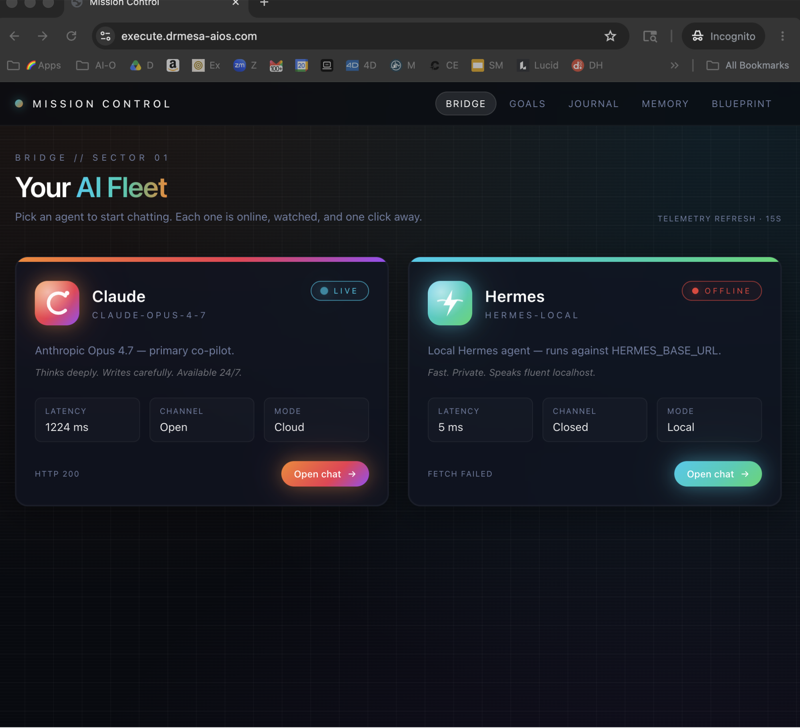
OpenClaw now has two distinct answers to "what is going on?", and they are complements rather than rivals. The OpenClaw Mission Control guide covers the live layer: Sessions for what is running right now, System Health for Gateway status and errors at a glance, Agent Squad for managing your team of agents, plus task boards and analytics. That is the view you drive with. The team reports plugin is the retrospective layer: scheduled, historical and shareable, built for the person who was not watching. A sensible split is to treat Mission Control as the cockpit and team reports as the flight log — you need the first when things are happening, and the second when you have to account for what happened, whether to a client, a business partner or simply your own planning session on Monday morning.
How to Get It: OpenClaw 2026.9.3 First
The plugin ships with the 2026.9.3 release, so updating is step one — and note the release's breaking changes before you do. The runtime floor moves to Node 24.16.0 or newer on the 24 line, or Node 26.1.0 or newer with 26 recommended, which is the check most likely to matter on self-hosted boxes. The same release also introduces safer updates that rehearse changes in an isolated candidate state before activation, so the jump itself is lower-risk than the September cadence might suggest. The release notes do not spell out per-deployment installation steps for the plugin, so once your Gateway is current, the official documentation at docs.openclaw.ai is the authoritative place for enabling optional plugins on your particular setup. If you are starting from scratch rather than updating, the Linux installation guide covers the server route, and the desktop app guide covers running it from your own machine.
📺 Watch: New OpenClaw Upgrades are INSANE!
Automation Workflows the Team Reports Plugin Improves
The interesting question for an automation stack is not what the plugin shows — it is what the reports let you stop doing by hand. Three workflows stand out immediately. Client reporting: if you run automation work for clients, a scheduled, authenticated digest of the repositories you manage is the raw material for status updates that currently get assembled manually. Agent oversight: if you delegate coding work through setups like the one in the OpenClaw attach for Claude Code guide, cadenced reports with people timelines are how you audit what your delegated sessions produced without replaying them. And team coordination: paired with the structured work organisation covered in the task workspaces write-up, the monthly report becomes the record of what a workspace actually delivered. If part of your model is selling automation itself, reporting is often the deliverable clients value most — the making money with OpenClaw guide covers where that fits in the wider offer stack.
The bigger pattern is worth naming: reporting is one of the jobs an agent operating system should own, not a chore a human bolts on afterwards — that is the thinking behind the Agent OS approach, where visibility is part of the system rather than an afterthought. And if you are still choosing which agent stack deserves to be the thing your reports are about, the Goldie Bench write-up covers how the different agent brains compare in structured testing.
If you want automations that pay for themselves — with the reporting layer that proves it to clients — check out the AI Profit Boardroom → join 3,000+ operators building AI income. And if you would rather start with a conversation, book a free SEO strategy session — it costs nothing and you leave with a plan.