The Kimi 2.6 benchmark numbers look great on paper, but what do they actually mean for your daily work? After testing the model across my full agent stack, I've got a clear translation from benchmark scores to real-world impact.
This post translates Kimi 2.6 benchmark wins into practical implications. What "outperforming Claude Opus 4.6 on max effort" actually means, what it lets you do that you couldn't before, and what you should and shouldn't expect.
What "Max Effort" Beats Claude Means
In benchmark talk, "max effort" tests push the model to its limit on complex tasks. Kimi 2.6 outperforms Claude Opus 4.6 here.
In practice this means for your hardest agentic tasks, Kimi can handle work Claude struggles with. For long autonomous workflows, Kimi sustains reasoning longer. For multi-step planning, Kimi maintains coherence further.
Real-world implication: tasks that used to need human supervision can now run more autonomously.
What "Beats GPT 5.4 On Humanities Last Exam" Means
Humanities Last Exam is a tough academic-style test, and Kimi 2.6 outperforms GPT 5.4 on it.
In practice, Kimi reasons better on complex analytical questions, performs better for research synthesis tasks, and is better for nuanced topic exploration.
Real-world implication: research and analysis workflows benefit most from Kimi.
What Long-Horizon Coding Performance Means
Kimi 2.6 sustained 5 days of autonomous work in benchmark tests. That's not a typo — 5 days.
In practice, you can fire Kimi on a project Friday night and come back Monday to find it done. Multi-day dev cycles compress into hands-off automation. Background work happens at a scale solo operators have never had access to.
This is closer to having an autonomous junior developer than a chat bot.
What Open Source Means For You
Kimi 2.6 is open source.
In practice, you can run it locally with no cloud costs, modify it to train custom variants, and avoid vendor lock-in because you control the model.
For privacy-conscious operators in legal, medical, and financial fields, this matters more than benchmark scores.
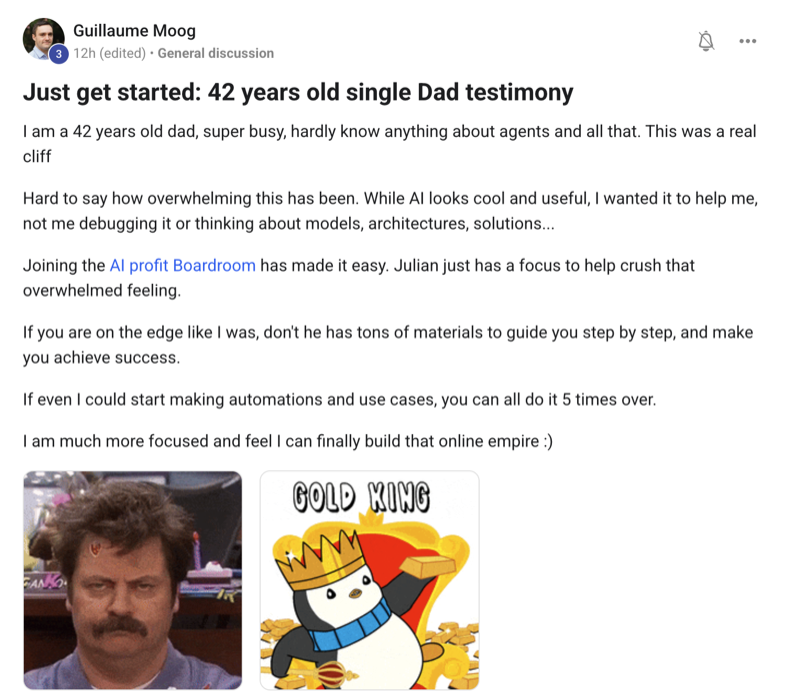
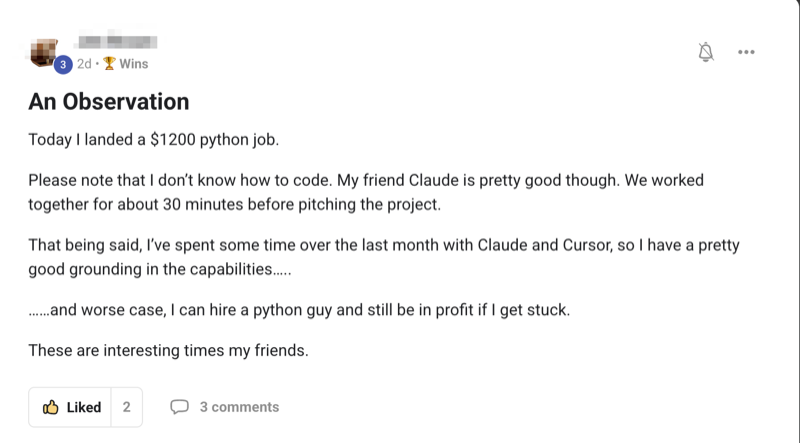
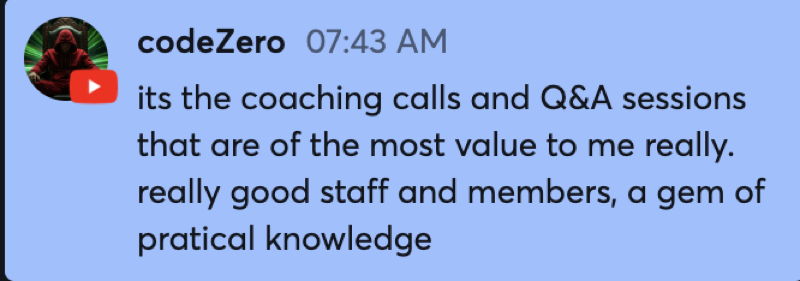
🔥 Want to translate Kimi benchmarks into your workflow? Inside the AI Profit Boardroom, I share my Kimi setup, real workflow tests, and benchmark-to-practical translations. Plus 6-hour OpenClaw course and weekly live coaching. 3,000+ members. → Get the playbook
What Coding-Driven Design Performance Means
Kimi 2.6 scores well on design benchmarks.
In practice, Kimi can generate decent landing pages from a description, UI/UX prototyping happens fast, and front-end code quality is acceptable for production.
Real-world implication: solo operators can build their own simple sites without hiring designers.
What Agent Swarm Capability Means
Kimi K2.6 supports agent swarms with multiple agents working in parallel.
In practice, big tasks like research reports and full sites get done in hours rather than days. You can split work across specialist agents and throughput increases dramatically.
This is the same pattern as Hermes Agent Swarm and OpenClaw multi-agent — Kimi's version is built natively into the model itself.
What "Agentic Tasks" Means In Practice
Kimi K2.6 is designed for agentic tasks specifically.
What that translates to is a model that plans then acts then validates then iterates, uses tools like web search, code, and browser, works without constant prompting, and maintains state across long workflows.
Real-world: less babysitting, more outcomes.
Six Use Cases Where The Kimi 2.6 Benchmark Translates To Wins
1 — SEO content batches
Run a swarm to write 10 blog posts in one mission. What used to take a week takes 2 hours. Pairs with the Reddit SEO AI Content approach.
2 — Deep research reports
Long-horizon research with verified sources, comparable to dedicated tools like Auto Research Claw.
3 — Autonomous coding
Fire a coding mission, walk away, return to working code.
4 — Multi-page site builds
Use Kimi to build a full landing page or small site from a description.
5 — Cloud-hosted OpenClaw automations
Via Kimi Claw, schedule tasks 24/7 without managing infrastructure.
6 — Spreadsheet automations
Kimi sheets builds database-style systems without writing the database code.
What The Kimi 2.6 Benchmark DOESN'T Mean
Be honest about the limits.
The benchmarks don't mean Kimi is "smarter" than Claude in every way. Claude still wins on subtle reasoning.
They don't mean Kimi is bug-free. Open source means active development and bugs happen.
They don't mean Kimi handles your specific niche. Test on your tasks before relying on it.
They don't mean Kimi is the right tool for casual chat. For chat, single-shot LLMs like Claude, GPT, and Gemini are still smoother.
How To Test Kimi On Your Workflow
Three steps.
1 — Pick a real task you do weekly
Don't test on toy problems. Pick something you actually need.
2 — Run it through Kimi 2.6 and your current model
Compare quality, speed, and cost across both runs.
3 — Decide based on the comparison
If Kimi is comparable plus cheaper, switch. If Kimi is worse on quality but acceptable plus cheaper, decide based on use case. If Kimi is worse and not cheaper, stick with current.
Translating Benchmarks To ROI
Quick math. If Kimi saves you £200/month versus Claude API costs, annual savings are £2,400. Time saved learning Kimi is roughly 5-10 hours. ROI is high.
If Kimi loses you £200/month in quality issues, annual cost is £2,400 in lost output value. Net negative.
Test before committing.
The Open Source Multiplier
Open source matters more than benchmarks for some operators. Privacy keeps data on your machine. Cost certainty means no surprise API bills. Customisation lets you train domain-specific variants. No lock-in means you can switch infrastructure without losing access.
For SMBs and solo operators in regulated fields, open source equals production-ready.
How Kimi Compares To Z AI GLM 5.1
Both are open source long-horizon agentic models.
Kimi 2.6 has stronger benchmark numbers across the board, native Chinese language strength, and built-in agent swarm and Kimi Claw.
Z AI GLM 5.1 sits at the top of SBench Pro, has 1,700 step autonomous capability, and ships under MIT license.
Both are worth testing. For most users, Kimi 2.6 has the better tooling. For pure autonomous capability tests, GLM 5.1 has impressive numbers.
🚀 Want my full Kimi + benchmark playbook? The AI Profit Boardroom has my Kimi setup, OpenClaw course (works with Kimi Claw), Hermes course, daily training, and weekly live coaching. 3,000+ members. → Join here
FAQ — Kimi 2.6 Benchmark Practical Implications
What benchmark matters most for SEO content work?
Long-horizon coding/agentic tasks — most directly applicable.
Should I use Kimi or Claude for daily work?
Test both on your tasks. For most agentic work, Kimi is competitive at lower cost.
Will Kimi's benchmark wins hold up?
For now yes, but Claude/GPT updates may close the gap.
Is open source enough reason to switch?
Depends on your privacy needs. For regulated fields, often yes.
How long does it take to learn Kimi?
If you've used Claude or GPT, 1-2 hours.
Can I run Kimi 2.6 on my laptop?
Yes — open source release supports local hosting.
Does Kimi work in English well?
Yes — and many other languages too.
Related Reading
- Kimi K2.6 Agent Swarms — multi-agent setup.
- OpenClaw Kimi K2.6 — OpenClaw plus Kimi.
- Hermes Agent Swarm — Hermes-side multi-agent.
📺 Video notes + links to the tools 👉
🎥 Learn how I make these videos 👉
🆓 Get a FREE AI Course + Community + 1,000 AI Agents 👉
The Kimi 2.6 benchmark wins translate to real productivity gains for solo operators — test it on your workflow this week.