When deciding how to build an AI agent, teams and individuals typically choose between visual no-code platforms and hands-on code-first frameworks. Each approach supports AI automation differently, with no-code prioritizing speed and accessibility while code emphasizes customization and control. Understanding both helps you avoid costly missteps and select the path aligned with your goals, skills, and timeline.
This comparison cuts through the noise with practical pros, cons, and examples. By the end, you'll know when to reach for a drag-and-drop tool versus a programmable framework, saving development time and frustration on your next AI agent project.
Two Paths to Building AI Agents: No-Code vs Code
No-code platforms let users construct AI agents through graphical interfaces, pre-built modules, and natural-language instructions rather than writing scripts. They abstract away infrastructure details so anyone can connect large language models, data sources, and actions into working agents quickly. This route suits fast experiments, internal tools, or teams without dedicated developers.
Code-first frameworks, on the other hand, require writing and organizing code—usually Python—to define agent memory, tool usage, decision loops, and multi-agent collaboration. You retain full visibility into prompt engineering, error handling, and custom integrations. This produces more autonomous agents capable of complex, long-running tasks that exceed platform boundaries.
The two paths differ in time-to-value, maintenance burden, and ceiling of capability. No-code solutions deliver working AI agents in hours or days; code approaches often take weeks but yield agents that scale better and avoid vendor constraints. Many organizations prototype in no-code then migrate logic to code once requirements stabilize.
No-Code Platforms for AI Agents
No-code tools have lowered the barrier for building AI agents by handling model access, orchestration, and user interfaces automatically. Popular choices include:
- Zapier: Connects thousands of apps to AI models for simple automations. Pros: familiar interface, quick setup, generous free tier for light use. Cons: limited support for long reasoning chains or stateful agents, usage-based pricing that grows fast.
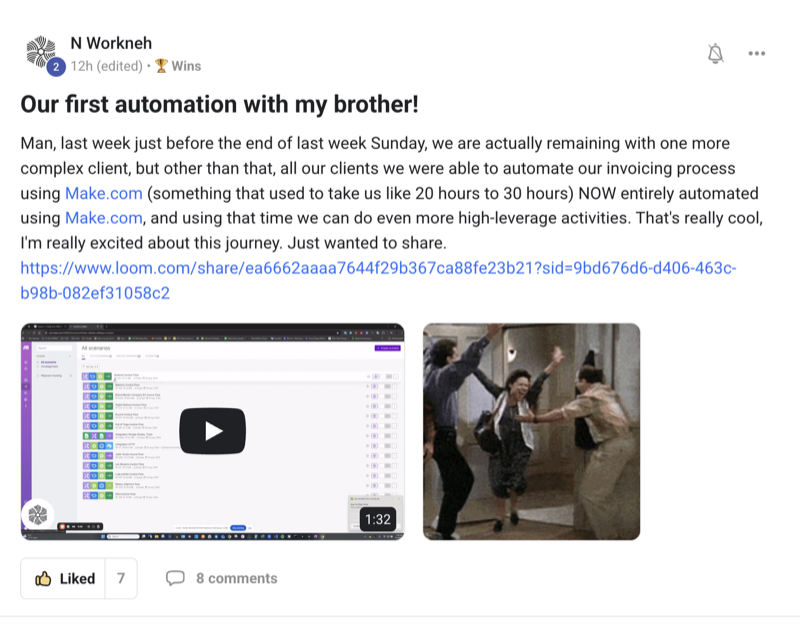
- Make: Offers advanced visual scenario building with better data manipulation than Zapier. Pros: powerful routing and error recovery, suitable for multi-step AI automation. Cons: still platform-constrained, requires learning its specific visual language.
- Voiceflow: Specializes in designing conversational agents and chatbots. Pros: excellent for voice and text interfaces, easy A/B testing and deployment. Cons: less emphasis on backend data workflows or complex tool integration.
- Lindy: Creates personal AI agents that manage email, calendars, and research tasks. Pros: low-friction for individuals and small teams, natural conversation-style setup. Cons: limited depth for enterprise processes and heavy customization.
No-code platforms excel when speed matters more than perfect control. They accelerate initial AI automation wins and let non-technical users contribute directly, yet they often hit limits around advanced prompt engineering or proprietary tool integrations.
Code-First Frameworks for AI Agents
Developers who need precise behavior turn to open frameworks that treat agents as programmable systems rather than black boxes. Leading options are:
- LangChain: Provides abstractions for chaining models, tools, and memory. Pros: mature documentation, huge ecosystem of integrations, strong for retrieval-augmented agents. Cons: can feel bloated for simple projects, debugging long chains requires experience.
- CrewAI: Focuses on role-based multi-agent teams that collaborate toward goals. Pros: straightforward agent definitions, fast iteration on workflows, compatible with LangChain. Cons: younger ecosystem and fewer production battle-tested patterns.
- AutoGen: Supports dynamic conversations among multiple agents. Pros: handles evolving dialogue and tool calling naturally, backed by strong research. Cons: higher conceptual overhead and best suited for experimental rather than straightforward production agents.
- OpenAI Swarm: A lightweight library for orchestrating agent swarms with OpenAI models. Pros: minimal boilerplate, quick to prototype basic autonomous agents. Cons: ecosystem lock-in and fewer advanced features out of the box.
Code-first development gives complete ownership of logic, prompt strategies, and observability. It demands programming comfort and ongoing maintenance but removes arbitrary limits, making it the foundation for serious, long-term AI agent deployments.
No-Code or Code: How to Decide When Building Your AI Agent
The right choice depends on matching the method to your actual constraints rather than following trends. Start by assessing three factors: your team's technical skill level, the required sophistication of the agent, and expected usage volume.
No-code wins for low-complexity agents, tight deadlines, or cross-functional teams that want to iterate without waiting for developers. Code is better when you need custom reasoning workflows, deep tool integration, cost control at high scale, or full data privacy compliance.
Simple decision framework:
No-Code Pros
- Launch in hours or days
- Minimal training required
- Easy for stakeholders to review and adjust
- Lower initial development cost
No-Code Cons
- Upper limits on agent intelligence and branching logic
- Usage fees can exceed custom builds at volume
- Harder to enforce specific security or compliance rules
- Vendor changes can break existing agents
Code Pros
- Unlimited flexibility and performance tuning
- Lower marginal cost once built
- Full auditability and custom observability
- Ability to incorporate private models or unique business logic
Code Cons
- Requires software engineering skills
- Longer time before first working agent
- Ongoing responsibility for updates and monitoring
- Risk of over-engineering simple problems
Use this decision table to guide your choice:
| Factor | Prefer No-Code | Prefer Code |
|---|---|---|
| Team Skills | Limited or no coding experience | Comfortable writing and maintaining code |
| Agent Complexity | Linear workflows, standard integrations | Multi-step reasoning, custom tools |
| Timeline | Need working agent this week | Can invest 2–6 weeks for production |
| Scale Expectations | Low to moderate volume | High volume or unpredictable growth |
| Customization Needs | Mostly standard behaviors | Unique logic or proprietary data flows |
If you're just starting to learn how to build an AI agent, begin with a no-code platform such as Zapier or Lindy to validate your idea quickly. Once requirements exceed platform capabilities, transition the working logic into a code framework like LangChain or CrewAI. The most practical path often combines both: prototype fast with no-code, then harden or scale with code when the value is proven.
Ready to take the first step on how to build an AI agent? Pick one platform or framework from this comparison, set up a small test agent this week, and measure results against your goals. Focus on solving one concrete problem rather than building the perfect system immediately.
Related Reading
- How to Build an AI Agent: Step-by-Step Guide (2026)
- Best AI Agent Builder Tools in 2026
- AI Agent FAQs: Beginner Questions Answered
- AI Agent Case Study: Lessons From Building Real Agents
Build Your First Agent With Us
Want the shortcut? Inside the AI Profit Boardroom we hand you the Agent OS, every prompt, and weekly calls where we build agents together.