The OpenClaw roadmap features matter most for automation builders, and after going through every shipped and upcoming feature I'm convinced this is the most important automation roadmap of 2026. This guide ranks each upcoming feature by how much it changes what you can actually automate.
This is the automation-focused view of the roadmap. I'll cover what each feature unlocks, what to build with today's shipped features, and what's worth waiting for before you invest serious time.
🔥 Want my automation-roadmap-aligned playbook? AI Profit Boardroom has automation playbooks aligned with each OpenClaw release as it ships. → Get the playbook
OpenClaw Roadmap Automation — Top 6 Impact Features
Here are the six roadmap features ranked by automation lift, biggest first.
1 — Memory Persistence v2
The biggest impact on the roadmap by a clear margin. Cross-session memory means autonomous agents that actually remember context, decisions, and prior work — which is the unlock that turns one-shot scripts into long-running operators.
2 — Mission Control
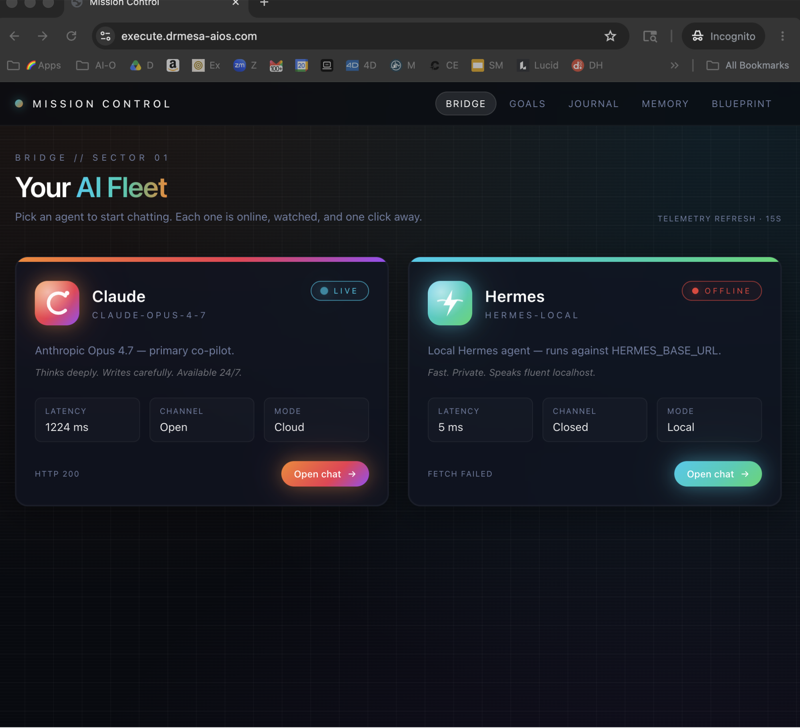
Visibility is what allows multi-agent operations to scale. Without it, multi-agent ops are blind and you can't tell which agent is doing what at any given moment.
3 — Multi-Agent Swarms
Native swarm orchestration is what scales OpenClaw beyond the single-agent cap. You go from one workflow at a time to dozens running in parallel without DIY orchestration breaking constantly.
4 — Computer Use V2
Multi-app workflows extend the automation surface dramatically. Anything that requires moving data between apps becomes automatable for the first time.
5 — Telegram Integration Deep
Mobile-triggered automations let you fire off workflows from your phone, which closes the loop between mobile life and desktop ops.
6 — AionUI Multimodal
Voice and visual triggers for automations open up new patterns that weren't practical before. Hands-free triggering matters more than people expect.
The top three are the genuine game-changers. The rest are valuable but incremental.
Watch The Roadmap
For the computer use feature that already shipped, this walkthrough covers what V1 actually does today.
OpenClaw Roadmap Automation — Memory Persistence
Why memory persistence matters more than any other roadmap feature.
Without persistence
Each agent run starts completely fresh. The agent re-explains its context to itself, loses prior decisions, and treats every conversation like the first one. That's fine for one-shot tasks but kills any long-running automation.
With persistence
The agent remembers across runs, builds knowledge over time, and becomes more useful month over month rather than starting from zero each time.
For long-running automations, memory persistence is the unlock that makes everything else worth building.
What To Build Now (Pre-Persistence)
There are three categories of skills worth building today even before persistence ships.
1 — Stateless skills
Daily summaries, research workflows, and content drafts don't need persistence to be valuable. Build them now and they'll keep working forever.
2 — Single-shot agents
Lead scrapers that run once on a schedule are inherently stateless. Build them today and they'll keep delivering value.
3 — Schedule-driven workflows
Cron-based jobs that run on a clock don't need to remember anything between runs. Build these now and reuse them.
These three categories don't need any future features and you should be shipping them today.
What To Wait For
There are three patterns worth waiting on rather than building DIY.
1 — Long-running autonomous agents
Wait for memory persistence v2 before building these. Building them now with DIY memory is wasted effort because you'll rip it out when native persistence lands.
2 — Multi-agent coordination
Wait for native swarms before doing serious multi-agent work. DIY multi-agent orchestration today is fragile and expensive to maintain.
3 — Mission-critical visibility
Wait for Mission Control if you need real visibility into multi-agent ops. Custom dashboards are a sinkhole and the native solution will be better.
Mission Control Impact
When Mission Control ships it transforms multi-agent operations.
Today
Multi-agent visibility is manual, with custom dashboards everywhere and no consistent view of what's running across agents.
After Mission Control
A centralised view shows everything in one pane of glass, and automation ops scale because the visibility problem is solved at the platform level.
Multi-Agent Swarms Impact
When swarms ship they unlock genuine parallelism inside OpenClaw.
Today
A single OpenClaw agent runs sequential workflows one step at a time.
After Swarms
Multiple OpenClaw agents work in parallel, with a manager agent coordinating worker agents. For the comparison view, see Hermes Agent Swarm, which has the equivalent feature on the Hermes side.
Computer Use V2 Impact
V1 already shipped in 4.27, and V2 expands the surface meaningfully.
Today (V1)
Single-app computer use is solid for workflows inside one application but doesn't move data between apps cleanly.
After V2
Multi-app workflows, drag-drop between apps, and cross-app data flow all become first-class. This expands the automation surface dramatically.
What Each Feature Unlocks For Solo Operators
For solo operators, the roadmap is enormous leverage.
Memory Persistence
A persistent personal assistant that knows your preferences, projects, and history without you re-explaining every time.
Mission Control
The ability to manage multiple agents without dashboard fatigue or losing track of what's running.
Multi-Agent Swarms
Run sales, content, and ops agents simultaneously rather than sequentially.
Computer Use V2
Cross-tool automation without writing custom code for every integration.
For solos, this roadmap effectively gives you a team without hiring anyone.
What Each Feature Unlocks For Agencies
For agencies, the roadmap unlocks full operational leverage.
Memory Persistence
Per-client agents that remember the client's history, preferences, and prior work.
Mission Control
Visibility across all client agents in a single dashboard so account managers can see the full picture.
Multi-Agent Swarms
Multi-discipline agent teams per client — one for content, one for ops, one for QA.
Computer Use V2
Agency tools fully automated end to end rather than partially.
For agencies, this is the difference between agent-augmented and agent-leveraged.
How To Plan Around The Roadmap
There are three rules I follow when planning around a moving roadmap.
1 — Build today's automations today
Don't wait. Use what's shipped and ship value now.
2 — Architect for tomorrow's features
Design with persistence and swarms in mind even if today they're not native. That way when features ship, migration is cheap.
3 — Reassess every quarter
What shipped last quarter? What's worth migrating? Quarterly reassessment is the right cadence — anything more frequent is noise.
Common Roadmap Planning Mistakes
There are three planning mistakes worth avoiding.
1 — Building memory yourself
Don't. Wait for native persistence. DIY memory ages poorly and creates migration headaches.
2 — Building swarm orchestration yourself
Don't. Wait for native swarms. DIY swarms break in subtle ways and the maintenance cost is brutal.
3 — Skipping current features
Don't wait for everything to be perfect. Build with what's shipped today and layer the rest as it lands.
How OpenClaw Roadmap Fits With Hermes
Both platforms are moving fast in 2026 and they complement each other rather than compete.
OpenClaw
Strong on computer use and multi-agent orchestration once swarms ship.
Hermes
Strong on skills and workflow patterns with mature scheduling and memory.
Pair them together — see Build Your Own OpenClaw for the integration patterns. Together they form a fuller automation stack than either alone.
Real Automation Use Cases Pre vs Post Roadmap
Five examples that show the lift from current to post-roadmap.
Lead generation
Pre-roadmap is a scraper plus manual triage. Post-roadmap, the same scraper plus memory plus auto-prioritise produces ranked leads end-to-end.
Customer support
Pre-roadmap is FAQ-only with no customer history. Post-roadmap is FAQ plus persistent memory of every customer interaction.
Content factory
Pre-roadmap generates per-piece without context. Post-roadmap is campaign-aware multi-piece generation.
Research
Pre-roadmap runs per-query with no memory. Post-roadmap builds cumulative knowledge over time.
Sales
Pre-roadmap is stateless outreach. Post-roadmap is relationship-aware sequences that remember every prior interaction.
Post-roadmap, automation matures from one-shot scripts to genuine operators.
How I'm Planning My Stack
Here's the quarter-by-quarter plan I'm running.
Q2 2026
Build core skills with currently shipped features, test computer use V1 daily in real workflows, and document everything for future migration.
Q3 2026
Adopt memory persistence v2 as it ships and migrate the stateless workflows that benefit most.
Q4 2026
Adopt multi-agent swarms and restructure the heaviest workflows for parallelism.
Q1 2027
Mission Control reaches GA and centralised ops becomes the new normal.
This is my plan and yours might differ. Adjust based on what your stack actually needs.
🚀 Want help planning your roadmap? AI Profit Boardroom has weekly live coaching where I'll plan with you on a screen-share. → Join here
Migration Cost When Features Ship
Be realistic about migration cost when new features land. Each major feature realistically requires 1-3 days of learning and 1-2 weeks of migrating existing workflows. Plan that into your quarter rather than treating it as free.
Risk Of Roadmap Slippage
There are three slippage risks worth planning for.
1 — Q3 feature delayed to Q4
Don't bet a quarter on a single feature shipping on time. Always have a backup plan.
2 — Feature changes scope
Roadmap items can be reduced in scope between announcement and ship. The version that lands may not be what was promised.
3 — Feature gets cut
Open-source roadmaps aren't promises. Features can get cut entirely if priorities shift.
The mitigation is simple: build with what's shipped, layer the future as it actually lands.
The Cost Of Not Tracking The Roadmap
There are three costs to ignoring the roadmap entirely.
1 — Falling behind
Competitors who track the roadmap adopt new features 2-3 months earlier and gain real ground.
2 — Wasted effort
Building DIY versions of features that ship natively soon is the most common form of wasted engineering time.
3 — Missing opportunities
New features create new productisation windows. If you don't know about them, you miss the window.
FAQ — OpenClaw Roadmap Automation
Best automation feature on roadmap?
Memory persistence v2 by a clear margin.
When ships?
Q2-Q3 2026 is the current expectation, though roadmaps slip.
Should I wait or build now?
Both. Build today's workflows today and layer tomorrow's features as they ship.
How to track roadmap?
GitHub plus the Boardroom community is the cleanest way to stay current.
Cost of the roadmap?
OpenClaw is free. The roadmap costs nothing to track or adopt.
Which has bigger impact — swarms or persistence?
Persistence first because it changes what's possible. Swarms second because they change what's parallel.
Best automation skill to build today?
Daily summary plus research skills are the highest-ROI starting points.
Related Reading
- OpenClaw Computer Use — already shipped and worth using today.
- OpenClaw Memory Persistence — the upcoming flagship feature.
- Hermes Agent Swarm — the Hermes side of the multi-agent equation.
📺 Video notes + links to the tools 👉
🎥 Learn how I make these videos 👉
🆓 Get a FREE AI Course + Community + 1,000 AI Agents 👉
The OpenClaw roadmap is the most important automation roadmap of 2026 — track it, build with what's shipped, and layer in new features as they land.