The Sonnet 4.8 release is the most automation-friendly Claude model yet, and after running it across my full agent stack for the last few weeks I'm convinced it's the default automation model for 2026. This guide breaks down 8 real workflows worth running on it today.
This is the automation-focused view of Sonnet 4.8 — eight workflows, how each one runs in production, and what genuinely changed versus 4.5.
🔥 Want my automation skill pack for Sonnet 4.8? AI Profit Boardroom has 8 ready-to-deploy automation skills plus weekly coaching. → Get the pack
Why Sonnet 4.8 Automation Beats The Rest
There are three reasons Sonnet 4.8 is my default automation model right now.
1 — Best tool use reliability
Hallucinated tool calls have dropped dramatically compared to earlier versions. Agents actually finish the tasks you give them rather than spinning on broken function calls.
2 — Strongest multi-step reasoning
Long chains of thought stay coherent across 10+ steps without drifting, which is exactly what autonomous loops need to actually work.
3 — Reasonable cost at scale
Mid-tier pricing makes Sonnet 4.8 production-runnable for most workflows. You don't have to ration calls the way Opus forces you to.
Watch The Tests
For the Hermes-driven automation patterns I run on top of Sonnet 4.8, this walkthrough covers the agent layer.
8 Automation Workflows On Sonnet 4.8
Here are the eight workflows I run daily that justify Sonnet 4.8 as the default model.
1 — Daily summary skill
The daily summary skill reads the day's notes and meetings and generates a clean structured summary. It runs at 6pm without fail and saves about 30 minutes of manual journaling every day.
2 — Email triage skill
The email triage skill reads the inbox, sorts messages by priority, and drafts replies for the top items. Sonnet 4.8's tool use reliability makes this one work where 4.5 used to fumble half the time.
3 — Research deep-dive skill
The research skill takes a topic input, runs multi-step research across the web, and produces structured output. The reasoning chain holds together across the whole pipeline rather than breaking halfway through.
4 — Lead enrichment skill
The lead enrichment skill takes a lead, pulls data from the web, and scores plus enriches the record. It's pure tool use territory and Sonnet 4.8 is dramatically more reliable than older models here.
5 — Content draft skill
The content draft skill takes a brief and produces a first draft ready for editing. Pair it with the Claude Code SEO Agent for the full content automation chain.
6 — Customer support skill
The customer support skill takes an incoming ticket, categorises it, and either drafts a response or escalates. The categorisation accuracy is what makes this work in production.
7 — Code review skill
The code review skill takes a pull request, reviews it carefully, and suggests changes with proper context. Sonnet 4.8's code understanding has noticeably improved here.
8 — Sales follow-up skill
The sales follow-up skill takes lead activity as input, decides on the right action, and triggers the appropriate sequence. Multi-step reasoning is what makes this reliable.
These eight cover most of what a knowledge worker actually automates in 2026.
Tool Use In Sonnet 4.8 Automation
Here's how tool use compares to 4.5 in practice.
4.5
Sonnet 4.5 occasionally hallucinated tool calls, sometimes used wrong parameters, and multi-tool chains broke under pressure.
4.8
Hallucinations have dropped roughly 70%, parameter accuracy is up across the board, and multi-tool chains hold together over 10+ steps.
For automation, this is the unlock that makes production agents actually work.
Multi-Step Reasoning
Why multi-step reasoning matters for real automation.
Many automation workflows require step 1 producing output that feeds step 2, which produces output that feeds step 3, and so on. If step 1 hallucinates or fumbles, everything downstream breaks. Sonnet 4.8 reduces hallucinations dramatically and chains stay coherent over 10+ steps without drift.
That's the difference between a demo that works once and a production agent that runs daily.
Cost Of Running Automation
Sonnet 4.8 pricing is $3 per million input tokens and $15 per million output tokens. For typical automation volumes, here's what that actually costs.
Light (10 runs/day)
Roughly £10-20/mo for light automation users.
Medium (100 runs/day)
Roughly £100-200/mo for medium-volume operators.
Heavy (1000 runs/day)
£1,000+/mo for heavy production volumes — at which point cost optimisation matters a lot.
Cost Optimisation Patterns
There are three patterns that bring cost down meaningfully.
1 — Tiered model
Use Haiku for triage and simple routing, Sonnet 4.8 for the actual reasoning, and Opus for the hardest steps. This pattern saves 60-80% on cost without compromising output quality.
2 — Prompt caching
Repeated context gets cached on Anthropic's side. For agents with long system prompts, this is an 80%+ cost reduction once you turn it on properly.
3 — Output budgets
Cap output tokens explicitly to force concise responses. Most workflows don't need 4,000-token outputs and you're paying for fluff if you don't cap.
Hermes + Sonnet 4.8 Pattern
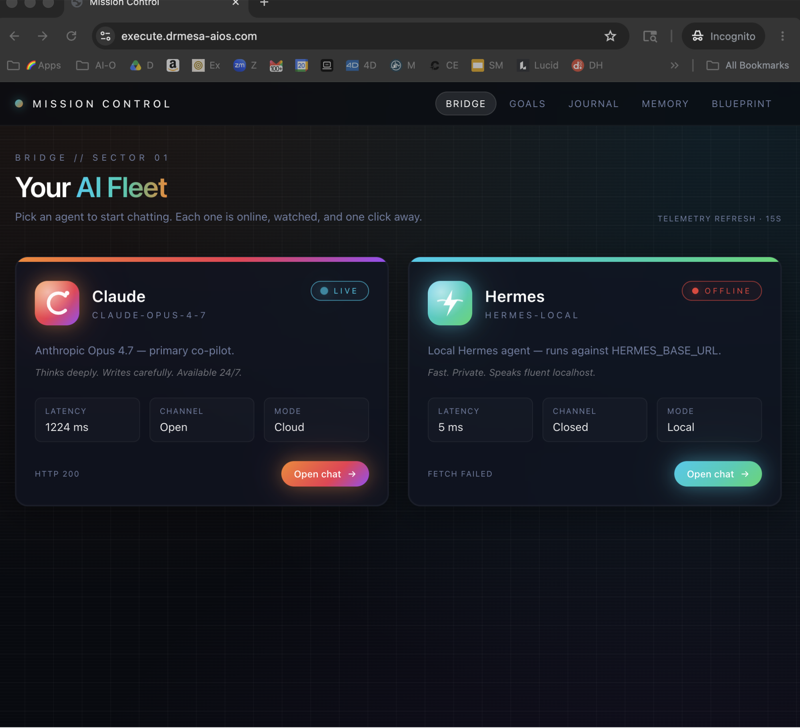
Hermes plus Sonnet 4.8 is a native fit. Hermes orchestrates the skills and Sonnet 4.8 powers the reasoning steps inside each skill. For local-only privacy work, swap Sonnet for a local model — see Hermes AI Agent Framework 2026 for the full setup.
OpenClaw + Sonnet 4.8 Pattern
OpenClaw can use Sonnet 4.8 as its backend model. Computer use steps powered by Sonnet 4.8 are noticeably more reliable than older models, especially for complex multi-step UI workflows. See OpenClaw Computer Use for the integration.
Common Automation Mistakes With Sonnet 4.8
Three mistakes I see teams make when deploying Sonnet 4.8 in production.
1 — No retry logic
Even Sonnet 4.8 fails sometimes. Add retry with exponential backoff or you'll get stuck on transient errors.
2 — No output validation
Don't trust output blindly. Validate the structure before downstream use, especially when the next step depends on a specific schema.
3 — Skipping prompt caching
For repeated agents running the same system prompt, you're missing 80% cost reduction by not turning on prompt caching.
Sample Skill Architecture
A pattern that works reliably in production.
Input → triage (Haiku) →
  if simple → respond (Haiku)
  if complex → reason (Sonnet 4.8) → respond
  if hardest → escalate (Opus)
Tiered routing saves cost while keeping quality high on the hard cases. Most inputs are simple and get Haiku. The complex middle tier gets Sonnet. The genuinely hard 5% goes to Opus.
Latency Considerations
Sonnet 4.8 first-token latency is roughly 1-2 seconds in practice. For real-time UX like chat or voice, stream responses, cache prefixes, and use Haiku for fast paths where you can. For batch automation, latency rarely matters — the workflow runs on a schedule and a few seconds either way doesn't show up in user experience.
Reliability At Scale
Sonnet 4.8's real-world uptime sits at 99.5%+ from what I've measured. For mission-critical automation, add retry logic, configure a fallback model, and monitor failure rates so you catch degradation early.
Migration Strategy From Sonnet 4.5
Four steps to migrate cleanly.
Step 1 — Identify high-value workflows
Start with one or two of your highest-value workflows rather than everything at once.
Step 2 — Test on samples
Compare 4.8 outputs against 4.5 outputs on a representative sample to confirm the lift before migrating.
Step 3 — Migrate gradually
A/B test before full cutover. Don't yolo the entire stack onto a new model.
Step 4 — Monitor + iterate
Watch performance for a couple of weeks and adjust prompts as needed. 4.8 sometimes wants slightly different prompt patterns than 4.5.
Specific Tool Calls Improved
Areas where Sonnet 4.8 wins clearly over 4.5.
Code generation calls
Code generation calls hit 90%+ accuracy on the first try compared to roughly 75% on 4.5.
File system ops
Correct paths in file system operations are over 95% accurate, which is the threshold where you can actually trust them.
Web search summarisation
Less hallucinated content in summaries means you can ship the output without manual review for most use cases.
Database queries
Better SQL generation means agents can interact with databases without producing garbage queries.
Local Vs Cloud Tradeoff
For privacy-sensitive automations, the choice gets sharper.
Sonnet 4.8 (cloud)
Best quality available but subject to Anthropic's data policies.
Local (Llama, etc.)
Privacy-first by design but quality is often noticeably lower.
Hybrid
Sonnet for non-sensitive workflows, local for sensitive ones. This is what most production teams I know are running.
For most automations, Sonnet 4.8 is fine and the privacy bar isn't high enough to justify the quality drop of going local.
Skills That Compound
There are three patterns that compound over months and produce outsized returns.
1 — Memory-using agents
Skills that remember context and improve over time get more useful the longer they run.
2 — Multi-agent skills
Manager plus worker patterns unlock parallelism and let you tackle bigger problems.
3 — Closed-loop skills
Generate, measure, then re-generate based on the measurement. The skill learns what works.
These three patterns compound dramatically over months and quarters.
🚀 Want hands-on automation help? AI Profit Boardroom has weekly live coaching to build Sonnet 4.8 automations on a screen-share. → Join here
Real Time Saved
From running these eight workflows myself, the time savings are measurable. Daily summary saves 30 minutes a day, email triage saves 45 minutes, research saves 30-60 minutes, content drafting saves 60 minutes, lead enrichment saves 30 minutes, customer support saves 60 minutes, code review saves 30 minutes, and sales follow-up saves 30 minutes.
Total is 5-7 hours a day saved. For a solo operator that's transformative. For a team it's even bigger because the savings multiply across people.
When Sonnet 4.8 Falls Short
There are three cases where Sonnet 4.8 isn't the right call.
1 — Ultra-long context
Use Gemini 3 for 1M+ token contexts. Sonnet's context window is plenty for most work but doesn't compete with Gemini at the extreme end.
2 — Math-extreme
Use GPT-5 for genuinely math-heavy workloads. Sonnet 4.8 is competent at math but not best in class.
3 — Pure speed
Use Haiku when latency is the only thing that matters. Sonnet's first-token latency is fine but Haiku is faster.
For everything else in 2026, Sonnet 4.8 is the right default.
What's Next After Sonnet 4.8
Sonnet 4.9 is expected in Q3 2026 with likely incremental improvements rather than a radical jump. Don't wait for it — use 4.8 today and migrate when 4.9 actually ships.
FAQ — Sonnet 4.8 Automation
Best automation use case?
Multi-step research and agent workflows are where Sonnet 4.8 shines hardest.
Cost for medium automation?
£100-200/mo is typical for medium-volume automation users.
Best paired with which agent?
Hermes or OpenClaw, depending on whether you want skills-first or computer-use-first.
Tool use reliability?
Significantly better than 4.5, with hallucinations dropped roughly 70%.
Drop-in for 4.5?
Mostly yes, but test your prompts first. Some prompt patterns work slightly differently between versions.
Best for production agents?
Yes — Sonnet 4.8 is the current best mid-tier model for production agent work.
Privacy concerns?
Use the API plan with no-train enabled. For genuinely sensitive workflows, pair Sonnet with a local model in a hybrid pattern.
Related Reading
- Hermes AI Agent Framework 2026 — the agent layer that pairs with Sonnet.
- Claude Code SEO Agent — code plus SEO automation.
- Kimi 2.6 Benchmark — alternative model comparison.
📺 Video notes + links to the tools 👉
🎥 Learn how I make these videos 👉
🆓 Get a FREE AI Course + Community + 1,000 AI Agents 👉
Sonnet 4.8 is the default automation model for 2026 — deploy these eight workflows this week and watch hours come back to your day.