The Gemma 4 Coder Desktop App is a small product release with a big strategic implication: local AI is starting to overtake cloud AI for most use cases. Here's the strategic take and why it matters more than the tool itself.
This post is the strategic angle. What the app actually signals, why it matters more than the tool itself, what it means for cloud AI subscriptions, and what you should be doing about it.
Gemma 4 Coder Desktop App — The Strategic Take
For the last few years, the AI conversation has been about cloud — bigger models, faster cloud inference, more expensive subscriptions.
The Gemma 4 Coder Desktop App is Google quietly betting on the opposite direction. Small enough to run locally, fast on consumer hardware like Apple Silicon M-series, free, and offline.
When Google bets against the cloud trend, that's worth paying attention to.
Why Local AI Catches Up Fast
Three reasons.
1 — Hardware acceleration
Apple's MLX framework runs models incredibly fast on M-series chips. NVIDIA's local options like Jetson and the RTX series are similar. The hardware is here.
2 — Smarter small models
Models like Gemma 4 are designed to be small and smart. The same techniques used to make giant models efficient now make tiny models powerful.
3 — Open source community
When models are open, the community optimises them. Closed models can't benefit from community contributions, which is a structural disadvantage.
Why Cloud AI Pricing Looks Shaky
The big subscription model logic was that you can't run AI yourself, you need their servers, and you pay monthly.
Gemma 4 Coder Desktop App breaks the first assumption. You can run AI yourself, you don't need their servers, and you don't need to pay monthly.
If this gets common, cloud AI subscription growth slows.
What This Means For Solo Operators
Three implications.
1 — AI tooling costs drop
If you can self-host, your monthly AI bill goes from £100s to roughly £0. For solo operators, that's meaningful runway extension.
2 — Privacy becomes the default
Local AI means data stays local. For lawyers, coaches, consultants, and therapists with private client info, this is huge.
3 — Sovereignty over your tools
Closed AI vendors can change pricing, deprecate features, or shut down. Local models can't. You own them forever.
🔥 Want to be ahead on local AI? Inside the AI Profit Boardroom, I share my local AI playbook including Gemma 4, Hermes, and OpenClaw setups. Plus daily training drops and weekly live coaching. 3,000+ members. → Get the playbook
What This Means For Cloud AI Companies
A few predictions.
1 — Pricing pressure increases
OpenAI, Anthropic, and Google can't charge premium subscriptions if local alternatives are good enough. Expect cheaper tiers within 6-12 months.
2 — Differentiation moves to specialised features
Cloud AI will lean into multimodal (image plus text plus voice), massive context (1M+ tokens), and specialised reasoning. Routine work gets commoditised by local.
3 — Hybrid becomes the norm
Most operators will run local AI for routine work and cloud AI for specialised hard tasks. Pure cloud-only loses share.
What This Means For Privacy-Conscious Operators
If you've been hesitant to use AI because of data concerns, local AI removes the concern. Gemma Chat keeps your data on your machine, with no server log retention and no training data harvesting.
For regulated fields like legal, medical, and financial, this is the entry point.
What This Means For Developers
Three things change.
1 — Customisation becomes possible
Open source local models can be fine-tuned for your domain. Not possible with closed cloud models.
2 — Lower latency for some use cases
Local AI has zero network latency. For interactive apps, this matters more than people think.
3 — Hybrid architectures
Build apps that use local AI for some tasks and cloud AI for others — best of both worlds.
What Solo Operators Should Do This Quarter
Three actions.
1 — Install Gemma 4 Coder Desktop App
If you have an M-series Mac, install it and get familiar with local AI workflows.
2 — Audit your AI subscriptions
Calculate annual spend on Claude, GPT, and similar tools. Identify which workflows could move to local.
3 — Build a hybrid plan
Plan to run 70-80% of work on local AI and 20-30% on cloud AI for hard tasks. Aim to halve your AI subscription costs over the next 6 months.
What This Means For The AI Industry
A few predictions for 2026.
1 — More local-first products
Other companies will follow Google's lead. Expect Anthropic local-friendly options, OpenAI smaller models with local options, and Microsoft Copilot local edition.
2 — Hardware companies benefit
Apple, NVIDIA, and AMD all benefit from local AI demand. Their AI hardware becomes more strategic.
3 — Open source models win share
Closed models still lead on frontier capability. Open source wins on cost, privacy, and customisation. For most users, open source wins.
The Bigger Trend Behind Gemma 4 Coder Desktop App
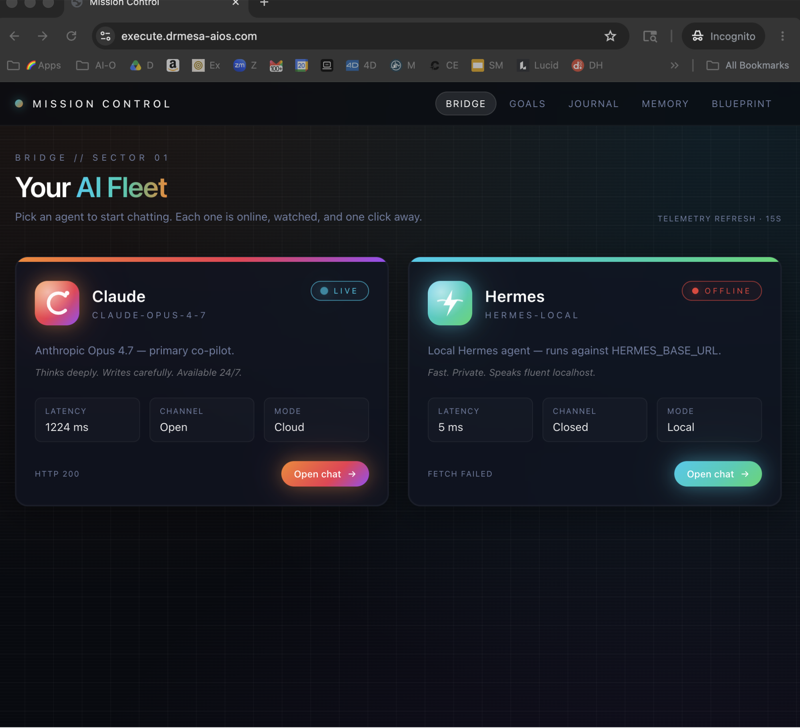
Gemma 4 Coder Desktop App is one piece of a clear pattern. Combined with Z AI's GLM 5.1 (open source, 1,700 step autonomous), Kimi 2.6 (open source, beats Claude on max effort), Hermes (free, open source agent framework), and OpenClaw (free, open source, with computer use) — the pattern is unmistakable.
Open source plus local plus free is competitive with closed plus cloud plus paid. For operators, the future is choice and the cost is dropping fast.
What You Lose By Going Local
Be honest. Less raw power than frontier cloud models. More setup effort. Hardware requirements that need a decent machine.
For most operators, the trade is worth it. For specialist hard tasks, keep cloud as backup.
Why This Matters For The Open Source Community
When Google ships free local AI, it validates the open source model, encourages more contributions, and pulls developer attention to local-first tools.
The open source ecosystem benefits from Google's involvement, even if Google has its own commercial agenda.
How To Position Yourself
For the next 6-12 months, focus on three things.
1 — Become local-AI proficient
Install and use Gemma Chat, Hermes, and OpenClaw. Build the workflow muscle.
2 — Build privacy-first offerings
Position your services around local AI for clients with privacy needs.
3 — Reduce cloud AI dependence
Migrate workflows from cloud to local. Save money and reduce vendor risk.
🚀 Want my full local AI strategic playbook? The AI Profit Boardroom has my local AI strategy, Hermes course, OpenClaw course, daily training, weekly live coaching. 3,000+ members. → Join here
FAQ — Gemma 4 Coder Desktop App Strategic Implications
Will local AI replace cloud AI entirely?
No, but it'll take significant share.
Should I cancel my Claude/GPT subscription?
Not yet — keep one for hard tasks and reduce others.
What's the biggest risk with going local?
Hardware obsolescence — but it's the same risk as any tech investment.
Will Apple Silicon stay ahead of NVIDIA for local AI?
Likely no — NVIDIA still dominates in raw compute. But Apple wins on integrated user experience.
Should solo operators invest in better hardware?
If you're going heavy on local AI, yes. A 32GB Mac or equivalent unlocks more capability.
Will closed AI companies adapt?
Yes — they have to. Expect cheaper tiers and better local options.
What about businesses that need compliance?
Local AI is a winner for compliance because data never leaves your infrastructure.
Related Reading
- Gemma 4 Coder Desktop App Overview — what it does.
- Hermes Gemma 4 — Hermes plus Gemma 4 setup.
- Kimi 2.6 Benchmark — open source competitor.
📺 Video notes + links to the tools 👉
🎥 Learn how I make these videos 👉
🆓 Get a FREE AI Course + Community + 1,000 AI Agents 👉
The Gemma 4 Coder Desktop App is a small product but a big signal — local AI is the future and the operators who adopt now will benefit most.