Agent OS sounds like a big build until you realise Claude Desktop can scaffold the whole thing for you in about an hour. That's how I shipped mine — one session, one prompt, the right docs pasted in, and a local mission control running on Next.js by the end of it. This is the build tutorial.
This is the hands-on build walkthrough. I'll cover the architecture I gave Claude, the docs I pasted in, the exact prompt structure that worked, what to expect on the first run, and how to skip the build entirely if you want the prebuilt zip from inside the Boardroom.
Don't want to build from scratch? The full Agent OS zip is inside AI Profit Boardroom for $69/mo locked forever. Plus 100+ prompts, the 30-day roadmap, and 5 weekly coaching calls. Skip the build
What Your Agent OS Will Do At The End
By the end of this build you'll have a working agent os running locally on your machine. Here's what shipping in roughly one hour looks like in practice.
A Next.js and Tailwind mission control dashboard running on localhost.
Live status indicators for Claude, Hermes and OpenClaw across the left rail.
A central chat panel for whichever agent you're driving, with full chat history saved to local memory.
A goals tracker with progress bars on the right rail.
A daily journal section that captures what got built and what got blocked.
Per-agent control rooms with API keys, providers, session history, skills, plugins, Kanban and analytics.
Built-in analytics covering sessions, tool calls, tokens, models and peak hours.
That's the shape of the final build. Now here's how to ship it.
Why The Phone OS Analogy Matters For Your Agent OS Build
Before you start prompting Claude, you have to internalise what you're actually building. The phone OS analogy is the fastest way to lock the architecture into your head.
Without an operating system, every app on your phone just sits there.
Calendar can't talk to Mail. Maps can't talk to Messages. Photos can't talk to anything.
That's most people's current AI setup. Claude in one tab. Hermes in a window. OpenClaw in another. No shared memory. No coordination.
The agent os is the iOS for your AI agents.
Once you can articulate the architecture in those terms, you can describe it to Claude in a way that produces a real build instead of a toy demo. I unpack the same idea in what is agent os and hermes agent os if you want more framing before you start.
The Hammer Vs Construction Company Test
The other framing I keep in mind during the build is the hammer analogy. It's the leverage test.
A hammer is one tool. You swing it to build one thing at a time.
A construction company is a system. It has crews, supervisors, and a process that keeps building when you step away.
If your build at the end of the hour is just another hammer, you've built a chatbot, not an agent os. The whole point of building this is to leave the hammer phase and enter the construction company phase.
Keep that filter active while you prompt. Every feature in the dashboard either makes the system more system-like, or it's a hammer dressed up in a Tailwind theme.
The Goldie Mission Stack You're Building
You're not just scaffolding a dashboard. You're scaffolding the four layers of the Goldie Mission Stack. Tell Claude this up front so it builds the right thing.
Layer 1 — Intelligence (Claude / Claude Code)
Intelligence is the CEO layer. Claude and Claude Code plan, decide and execute code.
Your dashboard needs a primary chat surface that drives Claude as the CEO of the whole stack. This is the agent the user talks to most.
Layer 2 — Execution (OpenClaw)
OpenClaw is the local gateway that routes tasks between agents, manages sessions, and coordinates multi-agent work.
Your dashboard needs an OpenClaw control room with session history and routing config. The deeper breakdown is over in openclaw computer use.
Layer 3 — Research (Hermes)
Hermes is the research workhorse — multi-step workflows, tool calls, Kanban, skills, plugins.
Your dashboard needs a Hermes control room with the Kanban view, skills/plugins list, and a tool-call log. The install is documented at hermes agent installation guide 2026.
Layer 4 — Self (Obsidian Vault + OMI)
Self is the personal context layer — Obsidian vault plus OMI recordings.
Your dashboard needs to read from a local Obsidian vault and let every agent pull personal context from it. This is the layer most people skip and it's the one that separates an agent os from a fancy chatbot.
Give Claude all four layers up front. If you only describe layers one to three, you'll get a chatbot wrapper, not a real agent os.
Step 1 — Pull The Docs You'll Paste Into Claude
Before you open Claude Desktop, gather the source material. Claude builds the right thing when it has the right docs and builds the wrong thing when it has to guess.
Open the Hermes Agent GitHub repo and pull the README plus the relevant integration docs.
Open the OpenClaw GitHub repo and pull the README plus the API surface.
Open the Obsidian and OMI docs for the read paths you'll wire into the Self layer.
Open the Anthropic docs for the chat completion API you'll use to drive Claude itself.
Save all of this into one local file or one big clipboard so you can paste it into the Claude Desktop session in one go.
This is the part most people skip and it's the reason their build never ships. Claude is a brilliant scaffolder but it can't infer integration details it's never seen.
Step 2 — Open Claude Desktop And Describe The Build
With the docs ready, open Claude Desktop and start one new session. The prompt structure that worked for me is below — adapt the wording but keep the structure.
I'm building a local agent os in Next.js and Tailwind on my Mac.
The architecture is the Goldie Mission Stack — four layers covering Intelligence, Execution, Research and Self.
Intelligence is Claude and Claude Code via the Anthropic API.
Execution is OpenClaw running locally — here are the docs.
Research is Hermes Agent running locally — here are the docs.
Self is my Obsidian vault and OMI exports — here are the read paths.
The UI is a mission control dashboard with live agent status on the left, central chat, goals tracker on the right, plus a per-agent control room view with API keys, providers, session history, skills, plugins, Kanban and analytics.
Scaffold the full app in Next.js with Tailwind, plus the API routes for each agent.
I want it running locally with no cloud dependencies beyond the model APIs.
Paste the docs after that prompt block. Claude will start scaffolding files.
I've covered the Claude Desktop side of this in claude hermes agent if you want to see how the agent connection plays out on the technical side.
Step 3 — Run It Locally And Fix The First Errors
The first build almost never runs clean. That's expected. Here's the loop that gets you to working in another 15 minutes.
Run npm install on the scaffolded project.
Run npm run dev to start the local server.
Open localhost in your browser and capture the first errors.
Paste those errors back to Claude in the same session with "fix these — keep the architecture identical."
Repeat the loop until the dashboard loads.
The whole agent os should be live on localhost within the first hour if you started with the right architecture and the right docs.
If you've ever scaffolded a project with Claude Code, this loop will feel familiar. The deeper version is documented in claude code local.
Step 4 — Wire The Self Layer Properly
The Self layer is where almost everyone's build breaks down. You can run Claude, Hermes and OpenClaw without it and the dashboard will work, but it won't feel like an agent os yet. It'll feel like a chatbot manager.
Wire the Obsidian vault read path so every agent can query it.
Wire the OMI export folder as a daily ingestion source.
Add a "pull context from vault" step to the system prompt of each agent.
Add a memory write path so chat history auto-saves into the vault overnight.
Once the Self layer is in, the agents start producing output that's specific to your business, your customers and your voice. That's the moment the build crosses from chatbot to agent os.
I've gone deep on the Obsidian side of this in claude obsidian setup if you want to read up on the vault integration.
Step 5 — Add Mission Control Analytics
The last piece that turns this from a dashboard into a real operating system is analytics. Without analytics, you can't see what's working and you can't optimise.
Add a sessions counter per agent.
Add a tool calls counter per agent.
Add a token consumption counter per agent and per model.
Add a peak hours chart so you can see when you actually use the system.
Add a daily journal entry that captures what got built and what got blocked.
These are quick to scaffold with Claude once the main dashboard is live. They're the difference between an agent os you'll actually use for thirty days and one you'll abandon after the first week.
Why Local-First Wins For This Build
I get asked why I didn't just host this on a server. Three reasons that matter for the build.
Your Obsidian vault and OMI transcripts hold personal data. That has to stay local.
Round trips to the cloud add latency that adds up across thousands of agent calls per day.
Local means the whole stack works even if your wifi drops or a provider has a bad day.
I cover the broader local-first case in claude code local for anyone weighing it.
How Long Does It Actually Take?
The honest version. The first time I built this, it took about an hour from "open Claude Desktop" to "mission control loading on localhost." That assumes you've gathered the docs in advance and you can describe the architecture clearly.
If you skip the docs prep, expect three to four hours of debugging.
If you skip the architecture description, expect Claude to build you a chatbot wrapper that you'll have to refactor.
If you skip the Self layer, you'll ship something that works but doesn't feel like an agent os yet.
Do all three properly and the one-hour ship is real.
Inside AIPB — The Prebuilt Agent OS Zip
If you'd rather skip the build entirely, the whole agent os is bonused inside AI Profit Boardroom at $69/mo locked forever.
Here's what's inside the Agent OS bonus pack.
The full Agent OS zip file ready to install with no scaffolding required.
100+ Agent OS prompts I use to drive Claude, Hermes and OpenClaw inside the dashboard.
The 30-day roadmap from install to fully operational mission control.
Plus the broader Boardroom — 5 weekly coaching calls, 3,000+ members building these systems, daily Q&A with me, 1,000+ done-for-you AI workflows, and a 7-day refund plus 30-day ROI twin guarantee.
Skip the one-hour build Grab the full prebuilt Agent OS zip inside AI Profit Boardroom for $69/mo locked forever. Twin guarantee on the first 30 days. Get the zip
The AIPB Walkthrough — See What's Inside
If you want to see the Boardroom before you join, here's a short walkthrough covering the calendar of weekly calls, the bonus stack including the Agent OS pack, and the community where members ship these builds together.
The walkthrough shows exactly what's in the bonus stack and how members use the calls to ship faster.
Free AI Money Lab — Start Without Paying
If $69/mo isn't where you're at yet, the AI Money Lab is my completely free community. You get the public training, a slice of the prompt library, and a slower walk through the Goldie Mission Stack.
It's the right on-ramp if you want to build your own agent os from scratch without the bonus pack.
Strategy Session — Custom Agent OS Builds
For business owners who want my team to build a custom agent os around their company, I take a small number of strategy calls through the Goldie Agency. Book free at go.juliangoldie.com/strategy-session.
This is the path for agencies, SaaS founders and operators who want it custom-fitted.
FAQ — Agent OS Build Questions
Can I really build an agent os in one hour?
Yes, if you've gathered the Hermes and OpenClaw docs in advance and you describe the four-layer Goldie Mission Stack to Claude up front. Without those two steps, expect three to four hours. With them, the one-hour build is real.
What stack does the agent os run on?
I built mine in Next.js with Tailwind because that's what Claude Desktop scaffolds cleanest. You can use any stack you want, but Next.js plus Tailwind gives you a working UI in the shortest possible time and Claude knows the patterns well.
Do I need a powerful machine to run an agent os?
Not particularly. Any modern Mac runs the dashboard, Hermes and OpenClaw fine. The heavy compute happens on the model API side, not on your local machine.
How is this different from just chaining Claude prompts?
A prompt chain is a workflow. An agent os is an operating system that runs many workflows across many agents with shared memory and a real interface. Workflow is to operating system what a recipe is to a restaurant.
What if my build doesn't work at the one-hour mark?
Paste the errors back to Claude in the same session and ask for a fix while keeping the architecture identical. The second loop usually closes the gap. If you're still stuck, the prebuilt zip inside AI Profit Boardroom skips the build entirely.
Why is the Self layer so important?
Because context is the biggest unlock in AI performance. Without the Self layer pulling from your Obsidian vault and OMI transcripts, your agents produce generic output. With it, the output is specific to your business, your customers and your voice.
About Julian
I'm Julian Goldie — AI entrepreneur, SEO expert and founder of the AI Profit Boardroom with 3,000+ members. I run Goldie Agency, a 7-figure SEO and AI agency, and I've published "SEO Link Building Mastery" and "Agency Marketing Mastery" on Amazon.
I help business owners scale with AI agents, automation and the agent os stack I run on my own machine every day.
Get my best AI training inside the AI Profit Boardroom
Further Reading On Agent OS Guide
For deeper walkthroughs on the topics in this article, the Agent OS Guide library has these worth bookmarking.
- Agent OS Guide — the full library if you want to browse every walkthrough in one place.
- Hermes Agent OS Q&A — covers the most common questions about wiring Hermes into your agent os.
- NotebookLM Agent OS — shows how NotebookLM slots into the research layer of your stack.
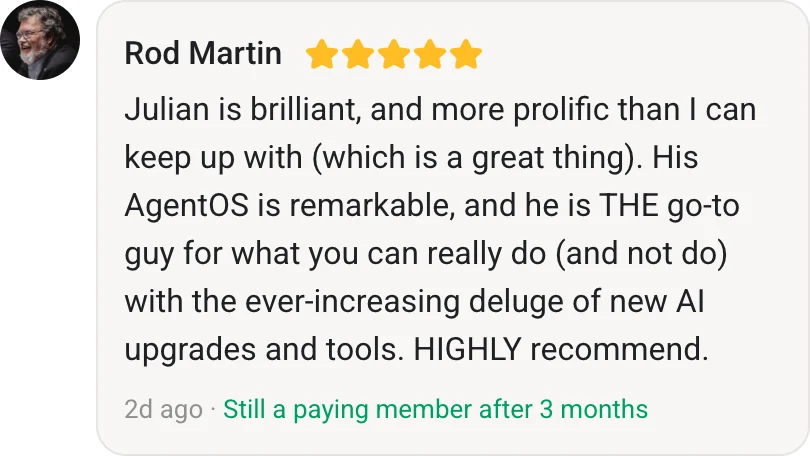
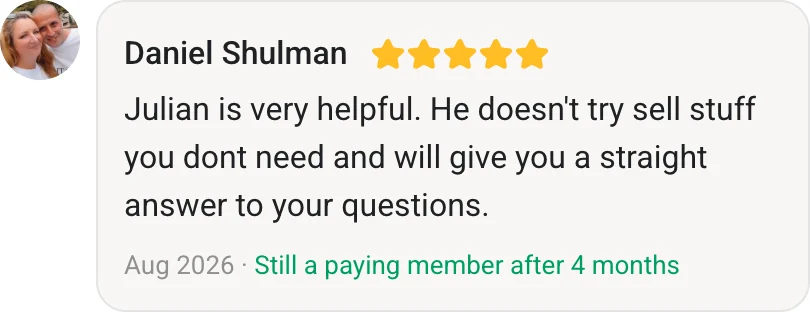
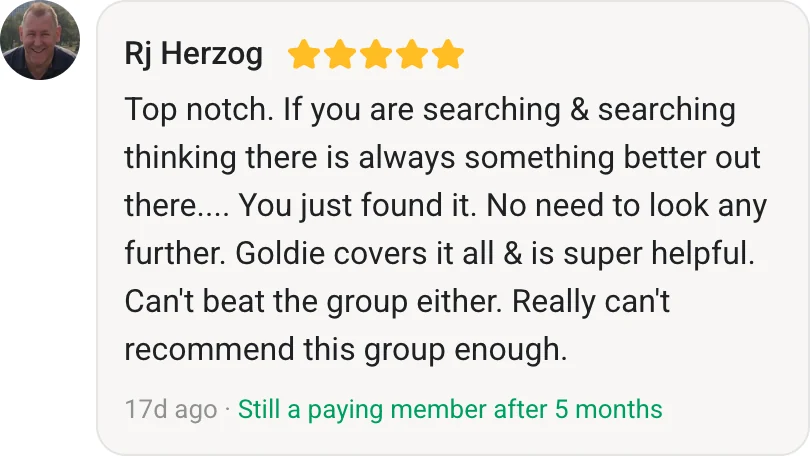
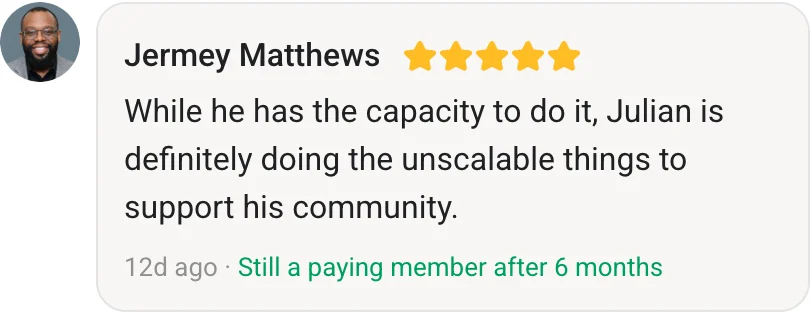
- Agent OS Member Testimonials — real stories from people who've built the stack themselves.
Also On Our Network
- Read on bestaiagentcommunity.com
- Read on aiprofitboardroom.com
- Read on aisuccesslabjuliangoldie.com
- Read on aimoneylabjuliangoldie.com
Related reading
- Hermes Agent OS for founders — the founder-focused view.
- Claude Hermes Agent — the technical Claude integration.
- Hermes Agent Installation Guide 2026 — the Hermes install walkthrough.
- Claude Code Local — the local-first case in more detail.
That's the one-hour build for your own agent os, and it's the cleanest way I've found to leave the hammer phase and start running an agent os instead.