The deepseek harness vs claude code test produced one number that should change how you budget for AI: 5 cents.
That is what a complete 3D animated website plus a working game cost to build on DeepSeek Harness.
Kasra Dash topped his account up to $10 right before we recorded, and the build barely moved the balance.
Per token, DeepSeek is roughly 56 to 57 times cheaper than Claude.
This post is about what that actually buys you, and what it quietly costs you.
The cost verdict first
If your AI bill is the thing stopping you from shipping more, DeepSeek Harness solves that today.
If your bottleneck is output quality, it does not.
Both things came out of the same test, on the same prompt, on the same afternoon.
The identical-prompt test
We gave both agents one prompt with no context: a 3D animated accountancy website, plus a simple game.
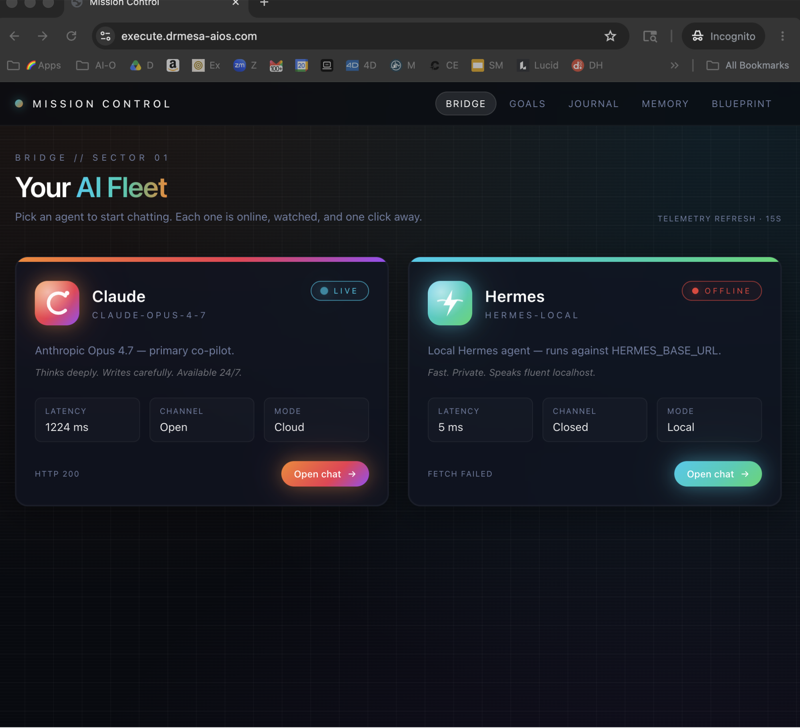
DeepSeek Harness ran DeepSeek V4 Pro.
Claude Code ran Claude Opus 5 on high.
Then we let them run and watched the meters.
The numbers that matter
DeepSeek Harness finished the whole thing in 11 minutes.
Claude Code was still going at 30 minutes.
DeepSeek burned 483,000 tokens getting there.
Claude was at 48,000 tokens at the 20-minute mark.
So DeepSeek used roughly ten times more tokens, on a model that costs about a 57th as much per token.
Do that maths and the cheap engine still wins by a wide margin, even while being wildly wasteful.
That is the part people miss when they only quote the per-token price.
| Cost factor | DeepSeek Harness | Claude Code |
|---|---|---|
| Tokens used on the build | 483,000 | 48,000 at 20 min |
| Relative price per token | ~57x cheaper | Baseline |
| Real cost of this build | ~5 cents | Materially more |
| Time to finish | 11 minutes | 30+ minutes |
| Harness licence | Free, open source | Bundled with the product |
| Model options | Swappable, incl. free brains | Claude only |
Where the 5 cents does not help
Open the two builds side by side and Claude's is the one you would show a client.
The animation on the Claude site follows your mouse.
It also worked in details it was never given, including Northwest England, because it had context from earlier sessions.
The DeepSeek build came out animated and cartoony, and its Tetris was perfectly functional but tonally wrong for an accountancy firm.
Kasra's line was that those two things should never mix, and he is right.
Neither build was actually ready to ship.
Both needed more prompting and more context.
The difference is how far from ready each one landed.
Free harness, free brain, near-zero bill
The harness is free and open source, which is why it collected 105,000 GitHub stars in about two days.
But a harness on its own does nothing.
It needs a brain plugged into it.
You can pay for DeepSeek V4 Pro, which is what we tested, and the bill still rounds to pennies.
Or you can plug a free model in instead — OpenCode works as a free brain inside the harness — and take the running cost to zero.
That is the automation unlock.
When an attempt costs nothing, you stop rationing attempts.
How to actually save money with this
Here is the rule I use.
Anything the client sees runs on the expensive engine.
Everything else runs on the cheap one.
Drafts, scaffolds, first passes, bulk page generation, experiments you expect to throw away — all of that goes to DeepSeek Harness, because the cost of being wrong is a fraction of a cent.
I do not swap between them manually.
My agentic operating system acts as the orchestrator and routes each job to the right engine.
I never even opened the harness to install it — Claude set it up, tested it and wired it in for me.
🔥 Want the routing setup that cuts the AI bill?
I walk through the whole Agent OS build inside the AI Profit Boardroom — cheap engine for volume, premium engine for client work, 4,000+ members, weekly calls.
The risk in the price
DeepSeek Harness is a v0.1 developer preview.
The pricing is early-stage pricing.
Nothing stops it rising, and a very verbose model at a normal price is a much less exciting product.
So build your workflow so the engine is swappable.
That is the entire argument for a harness where everything is a plugin, and it is the argument for putting an orchestrator in front of your tools rather than marrying one of them.
FAQ
How much does a build cost on DeepSeek Harness? Our full one-page 3D site with a working game came in at about 5 cents, from a $10 account top-up.
Is DeepSeek Harness really 57x cheaper than Claude? Per token, roughly. It also uses about ten times more tokens for the same job, so the real-world saving is smaller than the headline — but still large.
Is the harness itself free? Yes. It is free and open source. You only pay for the model you plug into it, and free models work too.
Does cheaper mean worse output? On this test, the Claude build looked more professional and used context it was never given. The DeepSeek build was faster and cheaper but tonally off.
What is the cheapest way to run it? Plug a free brain into the harness and reserve the paid model for jobs that need the extra quality.
A worked example of the cost gap
Let us make the numbers concrete, using only what we measured.
One build on DeepSeek Harness cost about 5 cents and finished in 11 minutes.
Say you generate twenty scaffolds a week — landing pages, component variations, first drafts.
That is roughly a dollar a week on the cheap engine, and about four hours of wall-clock time.
Now consider that the same workload on the premium engine is running at roughly 57 times the price per token, on an agent that took over 30 minutes on the same brief.
The arithmetic is not subtle.
The trap is assuming the cheap engine is therefore the right engine for everything.
It is not, because our test showed the cheap output landed further from finished, and the extra prompting rounds have a cost too — yours.
The rule I use is simple.
If the output is going in front of a person who pays me, it runs on the expensive engine.
If the output is an input to my own next step, it runs on the cheap one.
That single rule captures most of the saving without any of the risk.
Build it so the engine is swappable
The reason I keep hammering the orchestrator point is that pricing is not a permanent feature.
DeepSeek Harness is a v0.1 developer preview, and its pricing is early-stage pricing.
A very verbose model — 483,000 tokens for one page — is a bargain at a 57th of the price and a bad deal at parity.
So do not hard-wire your workflow to a specific vendor.
Put an orchestrator in front of the tools, keep the engines behind an interface, and make swapping a config change rather than a rebuild.
That is literally what the harness itself is designed for, since every part of it is a plugin.
Your automation stack should follow the same principle.
When a cheaper or better engine launches — and one will, probably within months — you want to move to it in an afternoon rather than a quarter.
The automation checklist
If you want to action this today, here is the order I would do it in.
One. Install the harness through your existing agent rather than by hand, so you do not add a tool to your day.
Two. Point it at a cheap or free brain first, and only pay for the premium model when a job justifies it.
Three. Write down which of your recurring jobs are client-facing and which are internal, then route them accordingly.
Four. Measure the token burn on a real job, not a toy one, because verbosity shows up at scale.
Five. Keep the premium engine wired in, because our test showed exactly where the cheap one falls short.
What the test does not tell you
One prompt is one data point, and it is worth saying that plainly.
We ran a single brief, with no context and no follow-ups, on both agents on the same day.
That is a fair snapshot, and it is not a benchmark suite.
Your workload might be more repetitive than ours, in which case the cheap engine looks even better.
Or it might depend heavily on accumulated context, in which case the premium engine pulls further ahead than our numbers suggest.
The way to settle it is to run your own version of the same test.
Same prompt, both agents, no extra context, and watch the token counters rather than the output alone.
That takes an afternoon and it will tell you more about your specific automation stack than any comparison post will.
What generalises from our run is narrower but still useful: DeepSeek Harness is dramatically cheaper and faster, it is far more verbose, and it lands further from finished.
Everything else depends on what you are actually building.
About Julian
I'm Julian Goldie — AI entrepreneur, SEO expert, and founder of the AI Profit Boardroom (4,000+ members). I help business owners scale with AI agents, automation, and SEO.
- 400K+ YouTube subscribers
- 7-figure AI agency (Goldie Agency)
- Daily training inside the Boardroom
- Author of multiple AI automation playbooks
→ Get my best AI training inside the AI Profit Boardroom
Related reading
The deepseek harness vs claude code cost gap is real, and the smart move is to spend it on volume rather than on your best work.