The Julian Goldie avatar automation is the n8n-driven pipeline that turns one trained avatar into daily multi-channel content, and after running it for months I'm convinced this is the highest-leverage content stack a creator can build in 2026. This guide walks through the full automation layer end to end.
This is the automation-focused view. I'll cover the full pipeline, what runs without you, and exactly how to wire it together.
🔥 Want my full avatar automation pipeline? AI Profit Boardroom has the n8n templates, HeyGen API setup, and full automation course. → Get the templates
The Five-Layer Avatar Automation
Here's how daily content actually runs through the pipeline.
Layer 1 — Research
n8n plus Firecrawl scrapes Reddit and Twitter for niche-relevant trending content every morning, producing a structured topic list before you even check your phone.
Layer 2 — Script generation
An LLM agent running Sonnet 4.8 or similar writes a script from the research output, trained on your style and voice patterns.
Layer 3 — HeyGen render
The script plus your avatar ID and voice ID gets POSTed to HeyGen, which returns a finished video file ready for distribution.
Layer 4 — Multi-platform publish
A tool like Blow Auto pushes the video to YouTube, TikTok, Instagram, X, and LinkedIn with platform-tailored cuts.
Layer 5 — Performance feedback
Analytics from each platform feed back into the research agent, which prioritises top-performing topics for tomorrow's content.
That's end-to-end automation with you in the loop only for final approval.
Watch The Walkthrough
For the agent-side automation that powers the script and research layers, this Hermes walkthrough covers the agent backbone.
Julian Goldie Avatar Automation — n8n Workflow Setup
Step by step, here's how to wire the pipeline.
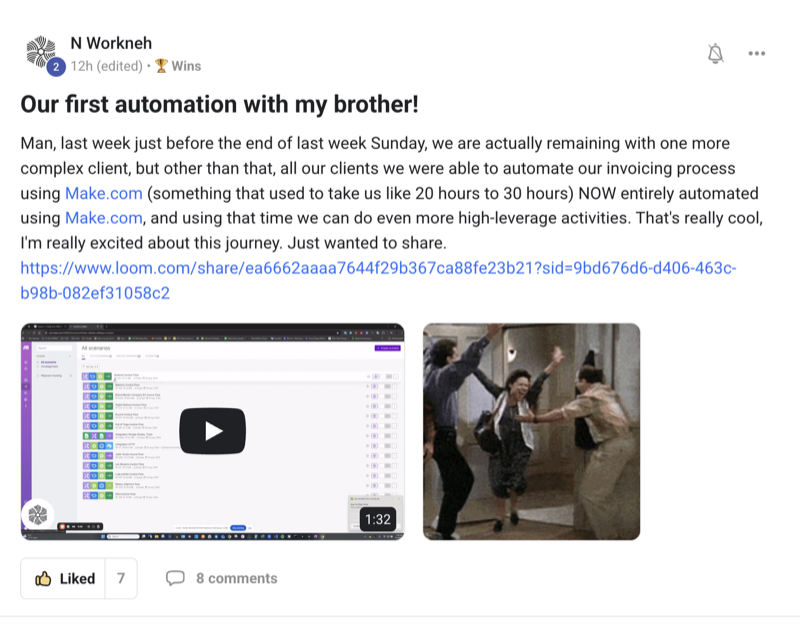
Setup 1 — Create n8n workspace
Either self-host n8n on a small VPS or use the cloud version, then connect to HeyGen, 11Labs, and Firecrawl APIs from inside the credentials manager.
Setup 2 — Build research node
The research node uses Firecrawl as the scraper and a topic detector LLM call to filter outputs, producing a clean structured topic list rather than raw HTML.
Setup 3 — Build script node
A single LLM call takes the topic list and generates a publish-ready script in plain text format.
Setup 4 — HTTP request node to HeyGen
A POST request to HeyGen with the script, avatar ID, and voice ID returns a video URL within a couple of minutes.
Setup 5 — Distribution node
The distribution node pushes the rendered video to each platform via API calls, with platform-specific formatting per channel.
Required IDs From HeyGen
Three IDs need to be captured before you wire the HTTP node.
1 — Avatar ID
Settings, then avatars, click yours, hit the three-dot menu, and copy the ID into your n8n credentials.
2 — Voice ID
Inside the AI voice section, click your voice clone, and copy the ID the same way.
3 — API key
Settings, subscriptions, then the API tab is where you generate and copy the key.
Plug all three into the n8n HTTP request node and the render layer is done.
Script Generation Best Practices
Three rules that genuinely matter for avatar quality.
1 — Plain text only
No HTML, no markdown formatting. HeyGen processes plain text and gets confused by anything else.
2 — Short sentences
Avatars handle 8-15 word sentences best. Longer sentences create unnatural pacing and breath patterns.
3 — Hook + value + CTA
Open with a hook in the first three seconds, deliver the value in the middle, and close with a clear CTA. The structure matters more than the polish.
Daily Schedule
Here's what actually runs and when. At 6am the research agent triggers, at 7am the script agent runs on the top topics, at 8am HeyGen renders 1-3 videos in parallel, at 9am a Slack notification with previews lands in your inbox, at 10am you do a quick five-minute manual review, and at 11am the pipeline auto-publishes to all channels.
Total human time is 5-10 minutes a day. Total output is 1-3 daily videos across 5 channels.
Multi-Channel Distribution
Five platforms with different content needs.
1 — YouTube
Long-form content of 3-5 minutes works best for SEO and search discovery.
2 — TikTok
Short clips of 15-60 seconds optimised for virality and algorithmic reach.
3 — Instagram
Reels of 15-90 seconds focused on brand-building and consistency.
4 — X (Twitter)
Short clips with strong hooks for thought leadership and engagement.
5 — LinkedIn
Professional 60-120 second content tuned for B2B buyer audiences.
The same source script gets tailored cuts per platform, which is what makes the multi-channel approach actually work.
Cost Of The Automation
Total stack cost breaks down as HeyGen at £19-49/mo, 11Labs at £4-22/mo, n8n free or £20/mo, Firecrawl free tier or £20/mo, distribution tool £20-50/mo, and LLM API £20-50/mo. Total all-in is £80-210/mo.
For daily output across five channels, that's dramatically cheap compared to the alternative of hiring a video team.
Common Automation Mistakes
There are three mistakes worth avoiding.
1 — No retry logic
The HeyGen API occasionally fails on render. Add retry with exponential backoff or you'll lose videos to transient errors.
2 — No fallback model
If your primary LLM fails, fall back to a simpler one rather than crashing the pipeline. A single point of failure kills daily reliability.
3 — Skipping QA
Always have a human-review step before publish, even if it's just five minutes a day. Auto-publishing AI content directly to your audience is how you blow up your brand.
Scaling Julian Goldie Avatar Automation
Four phases worth working through over the first year.
Phase 1 — single avatar single channel
Get the pipeline working end to end on one platform before adding complexity.
Phase 2 — single avatar multi-channel
Add the distribution layer once the core render pipeline is stable.
Phase 3 — multi-avatar multi-niche
Run separate pipelines for separate niches, each with its own avatar and content strategy.
Phase 4 — closed-loop optimisation
Performance data feeds back into research, and the system learns what works. By phase 4, you're running an autonomous content empire.
Pairing With Other Agents
Four tools that complete the stack.
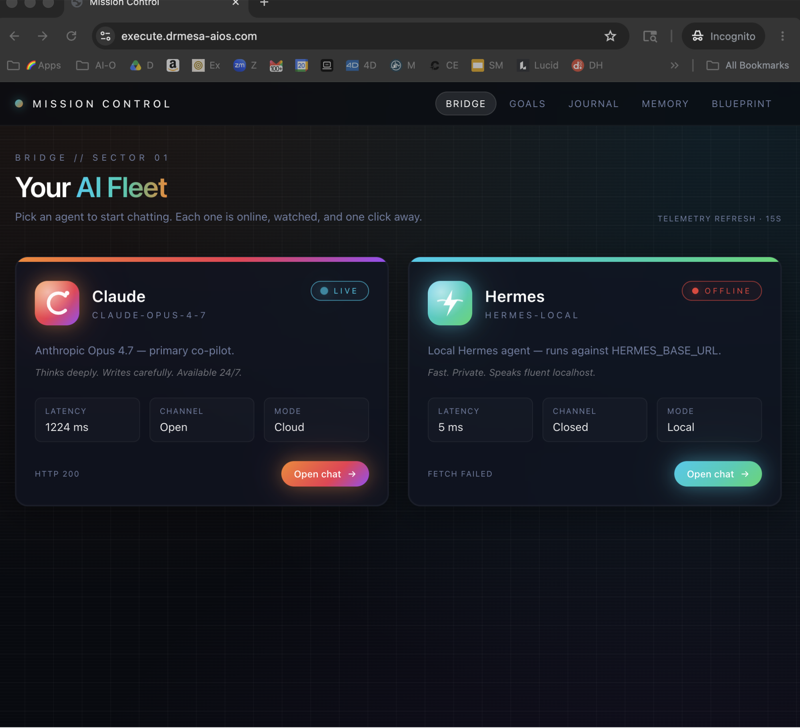
Hermes for ops
Hermes AI Agent Framework 2026 handles the agent ops layer.
Claude Code for n8n customisations
Claude Code SEO Agent for any custom dev work on the pipeline.
Sonnet 4.8 as script LLM
Sonnet 4.8 Review for the script generation step where quality matters most.
OMI Obsidian for content ideas
OMI Obsidian feeds raw idea capture into the research layer.
Together these form a complete content automation operation rather than just a video pipeline.
Reliability Considerations
Three things that affect reliability in production.
1 — HeyGen API stability
Generally good but with occasional throttling. Handle it with retries and you'll be fine.
2 — n8n flow drift
Workflows can break when upstream APIs change without warning. Test the full pipeline weekly so you catch breakages early.
3 — Platform policy changes
Each distribution platform's policies evolve constantly. Stay current with platform updates or you'll get unpublished content surprises.
Time Saved Per Week
Compared to manual content production, recording typically takes 5 hours per week, editing 8, distribution 5, and research 3 — the automation handles all of it.
Total time saved is roughly a part-time hire's worth of output for the cost of a few SaaS subscriptions.
🚀 Want my full automation templates? AI Profit Boardroom has n8n flow exports plus HeyGen API setup videos. → Join here
Performance Tracking
Three metrics worth tracking weekly.
1 — Videos shipped per week
The volume metric tells you whether the pipeline is healthy.
2 — Engagement per video
The quality metric tells you whether the content is landing with audiences.
3 — Cost per video
The efficiency metric tells you whether scaling is sustainable.
Optimise for all three rather than chasing volume alone.
Common Performance Issues
Three problems that show up at scale.
1 — Generic topics
The research agent surfaces generic stuff if the niche isn't tight enough. Tighten the prompt and the topic quality improves immediately.
2 — Robotic delivery
Voice clone tuning matters more than people realise. Re-train the voice if delivery feels off.
3 — Distribution lag
Some platforms throttle when you publish too frequently. Spread distribution across the day to avoid hitting limits.
When To Skip Automation
If you genuinely enjoy recording, your audience values raw unfiltered you, and volume isn't the goal, manual is fine. Otherwise, automate — the leverage is too good to leave on the table.
FAQ — Julian Goldie Avatar Automation
Best automation tool?
n8n is the cleanest fit for this pipeline.
Cost to run?
£80-210/mo all-in for the full stack.
Time saved per week?
Roughly a part-time hire's worth of output for daily multi-channel content.
Can I run multiple avatars?
Yes — separate pipelines per avatar, each with their own n8n workspace.
Best avatar engine?
HeyGen 2026 is the current best in class.
Best LLM for scripts?
Sonnet 4.8 produces the best script quality for most niches.
How to scale to multi-niche?
The Boardroom roadmap covers the multi-niche scaling pattern in depth.
Also On Our Network
- 🌐 Read on bestaiagentcommunity.com
- 🌐 Read on aiprofitboardroom.com
- 🌐 Read on aisuccesslabjuliangoldie.com
- 🌐 Read on aimoneylabjuliangoldie.com
Related Reading
- Hermes Agent Goals — autonomous goal-driven agents.
- Claude Code SEO Agent — content automation pair.
- Sonnet 4.8 Review — the script generation model.
📺 Video notes + links to the tools 👉
🎥 Learn how I make these videos 👉
🆓 Get a FREE AI Course + Community + 1,000 AI Agents 👉
The Julian Goldie avatar automation is the leverage tool of 2026 — wire it this month and watch daily output 10x without 10x effort.