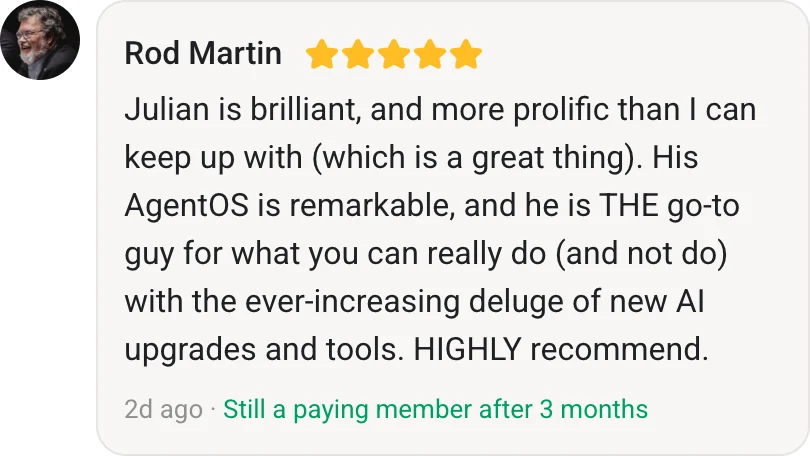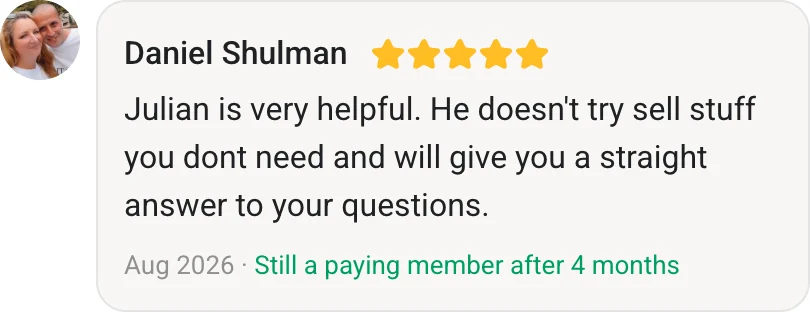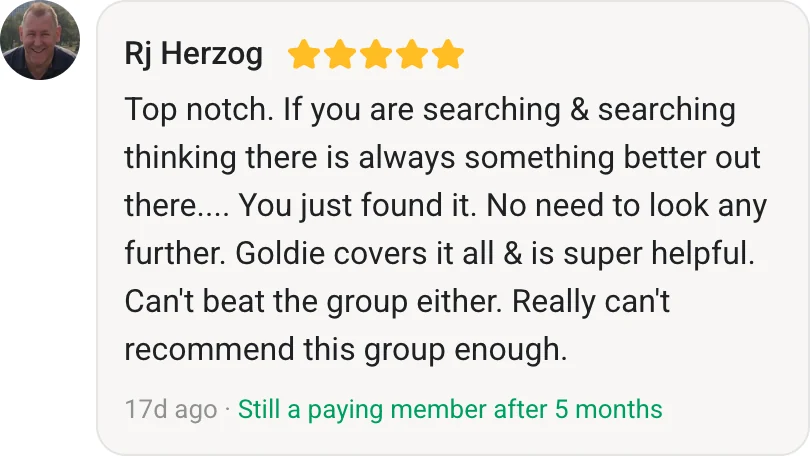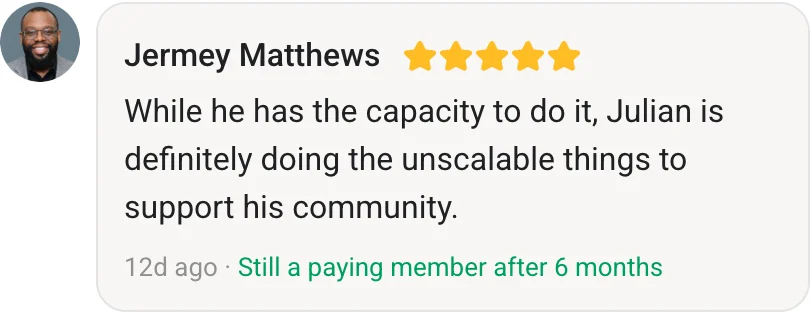
Agentic os is the shift I've watched every serious AI operator in my network make over the past six months in 2026. The ones still juggling four tabs of disconnected AI tools are quietly falling behind, and the ones who've rebuilt around a proper agentic os are shipping at a pace that doesn't even look fair. This post is the honest "why" behind that migration — what's actually driving it, what changes once you make the switch, and how my own stack is wired.
This is the operator's manifesto, not a beginner explainer. I'll walk through the reasons every AI operator I respect is rebuilding their stack around an agentic os, the four layers of the Goldie Mission Stack that sit underneath mine, and the practical changes you'll see in your own workflow once you make the move.
Want the same Agentic OS my operators are using? Inside the AI Profit Boardroom, you get the full Agentic OS zip, 100+ Agentic OS prompts and the 30-day rollout roadmap. Plus 5 weekly coaching calls and 3,000+ members already running this stack. Get inside for $69/mo locked forever
The Five Reasons Operators Are Migrating To Agentic OS
Before we get into the architecture, here's the short version of why the migration is happening. Every operator I've spoken to about agentic os in the last six months hits the same five reasons in roughly the same order.
The first reason is shared memory. Browser-tab AI workflows force every agent to start from cold context every single time, which burns tokens and time. An agentic os carries memory between every conversation and every agent.
The second reason is multi-agent coordination. Claude alone is not the most powerful version of Claude — Claude inside a mission control with Hermes and OpenClaw is.
The third reason is local-first privacy. Cloud-only setups are a liability for anyone handling client work or sensitive business data. An agentic os keeps the whole stack on your machine.
The fourth reason is the compounding effect. Every project gets faster the longer the agentic os has been running, because the context base keeps growing.
The fifth reason is leverage. One operator with a working agentic os can produce the output of a small team, because the stack handles parallel execution while the operator drives strategy.
That's the short list. The rest of this post is the deeper version.
The Phone OS Analogy That Makes The Term Stick
The cleanest way to explain why operators are making this move is the phone OS analogy. Without an operating system on your phone, every app sits there doing nothing on its own.
Calendar can't talk to Mail.
Maps can't talk to Messages.
Photos can't talk to anything else.
That's exactly the state of most operators' AI setups today.
ChatGPT lives in one tab. Claude lives in another. Hermes and OpenClaw are scattered across the desktop with zero shared context between them.
An agentic os becomes the iOS for your AI agents. It connects every agent to every other agent, holds a shared memory layer across all of them, and runs the whole stack locally so your data stays on your machine.
For the plain-English version of the term, I unpack it further in agentic os meaning.
Hammer Vs Construction Company — Operator Edition
The other analogy I use with every operator who asks about this is the hammer one. Using Claude on its own is like owning a hammer. Running an agentic os is like running a construction company. Both can build things, but only one of them scales beyond a single pair of hands.
A hammer needs you to swing it every single time.
A construction company has crews, supervisors, plans and a system that keeps moving when you step off the site.
That's the exact gap between operators who use AI tools and operators who run an AI operating system.
Day one of using Claude on its own is fine.
Day thirty looks almost identical to day one because nothing remembers anything and nothing compounds.
Day one of running an agentic os is also fine.
Day thirty is wild, because every conversation has stacked into memory, every workflow is wired into a Kanban, and the agents now operate with full context on your business.
That compounding curve is the part operators don't believe until they live with it for a month, and the part they refuse to give up once they have.
The Goldie Mission Stack — What's Under The Hood Of My Agentic OS
The agentic os I run is built on the Goldie Mission Stack. Four layers, each with a clearly defined job, and the whole thing falls apart if you skip the last layer. This is the same architecture I'm seeing other operators converge on in 2026.
Layer 1 — Intelligence (Claude And Claude Code)
Intelligence is the CEO layer. Claude and Claude Code sit at the top, plan the work, decide what to prioritise, and execute code when a build is required.
In a browser-tab workflow, this layer is isolated in a single Claude tab with no memory of yesterday.
In an agentic os, Claude is wired into the mission control and has direct access to the shared memory layer.
The Claude-specific deep-dive lives in agentic os claude, and the Claude Code variant in agentic os claude code.
Layer 2 — Execution (OpenClaw)
OpenClaw is the execution layer that turns a single agent into a multi-agent team. It's the local gateway routing work between Claude, Hermes and any other agent, managing sessions, and coordinating real browser tasks.
If Intelligence is the CEO, OpenClaw is the COO of the operator stack.
The technical breakdown of OpenClaw sits in openclaw computer use and the Claude integration is over in agent os claude.
Layer 3 — Research (Hermes)
Hermes is the research layer. Multi-step workflows, tool calls, Kanban boards, skills, plugins and browser automations all live here.
This is the workhorse layer of the agentic os. It's where the long-running operational work happens once Claude has decided what needs doing.
I've documented Hermes deeper in hermes agent os and the broader framework in hermes ai agent framework 2026.
Layer 4 — Self (Obsidian Vault Plus OMI)
The Self layer is the one almost no operator gets right on the first attempt, and it's the one that turns a generic agent stack into a personal agentic os. OMI captures what's on your screen and through your microphone during the day, exports the transcripts into your Obsidian vault, and every agent pulls personal context from that vault on every prompt.
This is the unlock that separates real operators from people running demos.
Without it, your agents produce generic output any other agent could produce.
With it, the outputs are specific to your business, your customers, your projects and your voice.
That's why I refuse to call something an agentic os if it skips the Self layer.
Mission Control — The Operator's Dashboard
Mission control is the front door to the whole agentic os. It's where every operator I've coached spends the first hour of their working day, and it's the thing that finally makes the stack feel like a real system.
Down the left rail are live status indicators for each agent — Claude, Hermes and OpenClaw all showing online state and load.
The middle is the active chat with whichever agent you're driving.
The right rail is a goals tracker with progress bars across your key projects.
Every chat auto-saves into the Obsidian memory layer in the background.
A daily journal section captures what you worked on, what got blocked and what's queued for tomorrow.
Each agent has its own control room with API keys, providers, session history, skills, plugins, Kanban board and full analytics.
The analytics view shows sessions, tool calls, tokens consumed, models used and peak working hours.
That last piece matters more than most operators realise. You can't optimise spend on something you can't see, and the agentic os is the first time most operators get clean visibility into their AI usage. The command-centre view sits in agentic os command center.
Why Local-First Is The Operator's Edge
The other reason operators are migrating to an agentic os is the local-first design. Cloud-first AI introduces three problems that compound the more serious your work gets.
Your data lives on someone else's servers, which is a privacy and compliance issue when an agent is reading client work.
Round trips to the cloud add latency that adds up across thousands of calls per week.
You're dependent on third parties staying online, keeping pricing fair and not changing terms on you mid-project.
Local-first agentic os fixes all three.
Data stays on your Mac.
Latency drops to near zero.
The stack keeps working if the wifi drops or a provider has a bad day.
Operators dealing with regulated industries, client confidentiality or sensitive IP have no choice but to run local-first in 2026. The agentic os makes that a feature, not a constraint.
The Build Path — Roughly One Hour
You can build a working agentic os in roughly one hour with Claude Desktop. I've done it from scratch and so have plenty of operators in the Boardroom.
Open Claude Desktop and describe the dashboard you want in detail.
Paste in the Hermes and OpenClaw documentation from GitHub so Claude has the integration surface to work with.
Ask Claude to scaffold the whole thing in Next.js and Tailwind so it feels like a real app, not a script.
Run the result locally, fix a couple of issues with another round of prompts, and within an hour the mission control is live on localhost.
If you'd rather grab a pre-built version, the full zip is bonused inside the Boardroom — the download walkthrough is in agentic os download.
What Changes For An Operator After The Switch
The day-to-day shift is honestly harder to describe than the architecture. Here's what every operator I've coached has reported once their agentic os has been running for a month.
You open one app in the morning instead of four tabs.
The agents already know what you worked on yesterday because the memory layer carried it forward overnight.
You describe a new project once, and every agent has shared context for the rest of the build.
Long-running tasks run in the background on the Hermes side while you work on something else.
Daily journal and analytics give you an honest view of where your time and tokens are going.
The compounding effect kicks in around week two. By the end of the first month, the agents are producing operator-grade output that no fresh ChatGPT session could match.
That's why every AI operator I respect is making this move.
Inside AIPB — The Operator's Agentic OS Bonus Pack
If you want the shortcut to running the same agentic os my best operators run, the whole setup is bonused inside AI Profit Boardroom at $69/mo locked forever.
The full Agentic OS zip file ready to install on your machine.
100+ Agentic OS prompts I use to drive Claude, Hermes and OpenClaw across the stack.
A 30-day roadmap that takes you from zero to fully operational mission control.
The Boardroom wraps all of that with 5 weekly coaching calls, 3,000+ members, 1,000+ done-for-you workflows, daily Q&A with me, and the twin guarantee — 7-day refund plus 30-day ROI promise.
This is the stack I run my Goldie Agency on. It's the same stack the operators in my circle are using.
Get the full Agentic OS bonus pack Join the AI Profit Boardroom at $69/mo locked forever and grab the Agentic OS zip, 100 prompts, 30-day roadmap and weekly coaching. Get inside now
The AIPB Walkthrough — Inside The Operator Community
If you want a proper inside look at the Boardroom before joining, the walkthrough below shows the weekly calls, the bonus stack including the Agentic OS pack, and the community space where operators ship these builds together.
You'll see why this is the stack the serious operators have settled on.
Free AI Money Lab — The Operator's On-Ramp
If $69/mo isn't where you're at yet, I run a completely free community as well. The AI Money Lab gives you the public training, a slice of the prompt library, and a slower walk through the Goldie Mission Stack.
It's the right on-ramp for operators wanting to see how I work before joining the paid Boardroom.
Strategy Session — Goldie Agency Custom Builds
For operators who'd rather have my team build a custom agentic os around their company instead of going DIY, I take a limited number of strategy sessions through Goldie Agency. Book a free strategy call at go.juliangoldie.com/strategy-session and we'll map out what your version of mission control should look like.
This is the path for agencies, SaaS founders and operator-led businesses that want the system custom-fitted.
FAQ — Operator Questions On Agentic OS
Why are operators moving to agentic os in 2026?
Because browser-tab AI workflows can't deliver shared memory, multi-agent coordination, local-first privacy or compounding context. An agentic os solves all four. Every operator I respect has either made the switch or is in the middle of it.
How is agentic os different from just adding plugins to Claude?
Plugins extend one agent. An agentic os connects multiple agents under one mission control with a real memory layer. The shift is architectural — you're not adding features, you're rebuilding the foundation.
Is the build hard for a non-developer operator?
Not the way I built mine. I scaffolded the whole agentic os with Claude Desktop in one prompt, pasted in the Hermes and OpenClaw docs, and let Claude write the Next.js and Tailwind app. The bonus pack inside AI Profit Boardroom ships the zip ready to install, which skips even that step.
Do operators really run the whole stack locally?
Yes. Local-first is the whole point. Cloud-only setups don't work for operators handling client data or sensitive business context. The agentic os runs on a standard Mac, with all data staying on your machine.
How long until the compounding effect kicks in?
Around week two for most operators. By the end of the first month, the agents are producing outputs that are specific to your business in ways a fresh ChatGPT session never could be.
What's the guarantee on the Boardroom?
Twin guarantee — a 7-day refund plus a 30-day ROI promise. The price is $69/mo locked forever. If the bonus pack doesn't pay back in the first month, you walk with your money back.
About Julian
I'm Julian Goldie — AI entrepreneur, SEO expert and founder of the AI Profit Boardroom with 3,000+ members. I run Goldie Agency, a 7-figure SEO and AI agency, and I've published "SEO Link Building Mastery" and "Agency Marketing Mastery" on Amazon.
I coach operators and business owners through the migration from tab-based AI workflows to a proper agentic os.
Get my best AI training inside the AI Profit Boardroom
Further Reading On Agent OS Guide
For deeper walkthroughs on the topics in this article, the Agent OS Guide library has these worth bookmarking.
- Agent OS Guide — the full library if you want every angle on the agentic os concept in one place.
- Hermes Agent OS Q&A — answers the questions that come up when you turn an agentic os from idea to install.
- NotebookLM Agent OS — a concrete worked example of one agent inside the agentic os pattern.
- Agent OS Member Testimonials — proof points from people running this stack day-to-day.
Also On Our Network
- Read on bestaiagentcommunity.com
- Read on aiprofitboardroom.com
- Read on aisuccesslabjuliangoldie.com
- Read on aimoneylabjuliangoldie.com
Related reading
- Agent OS — the business-owner view of the stack.
- Agentic AI OS — the deeper architectural breakdown.
- Agentic OS Claude — the Claude-specific view.
- Agentic OS Claude Code — the Claude Code variant.
- Agentic OS Command Center — the dashboard up close.
Video notes + links to the tools
Get a FREE AI Course + Community + 1,000 AI Agents
Every operator I respect is moving to an agentic os in 2026, and the longer you wait to make the move the further behind you fall.